The Book of Hours: A Medieval Bestseller
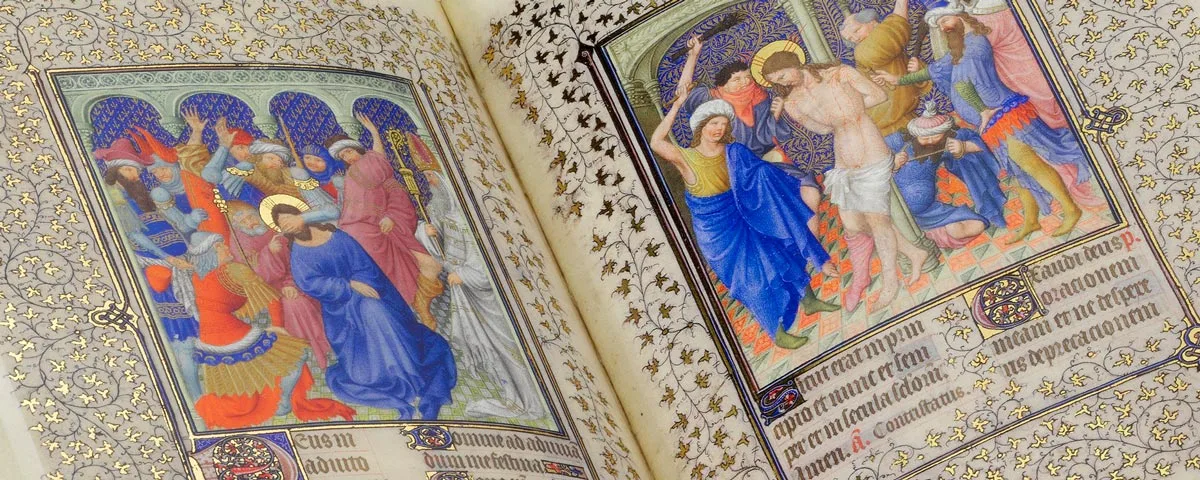
No other type of manuscript survives in such great numbers as the book of hours. By the thirteenth century, it had become the most widely used prayer book in western Europe. This page introduces these illuminated manuscripts and some of their remarkable miniatures.
The Origin of the Name “Book of Hours”
To understand why the Books of Hours are called this way, we have to look at the word "hour". It comes from the Greek word ὅρα, later hora in Latin, which indicated "a limited space of time", or, more specifically, the 3 seasons the ancient Greeks divided the year into. In the Middle Ages it slightly changed meaning and started to indicate the more or less exact space of time dedicated to praying or doing business. Ordinary people had the desire to follow the example of monastic orders, which had a routine of rituals and prayers observed every day. The Book of Hours had the aim of letting them do just that.
The Composition of a Book of Hours
Books of hours are not all alike. The devotional texts they include vary, but some sections are common. Here are the most frequent ones.
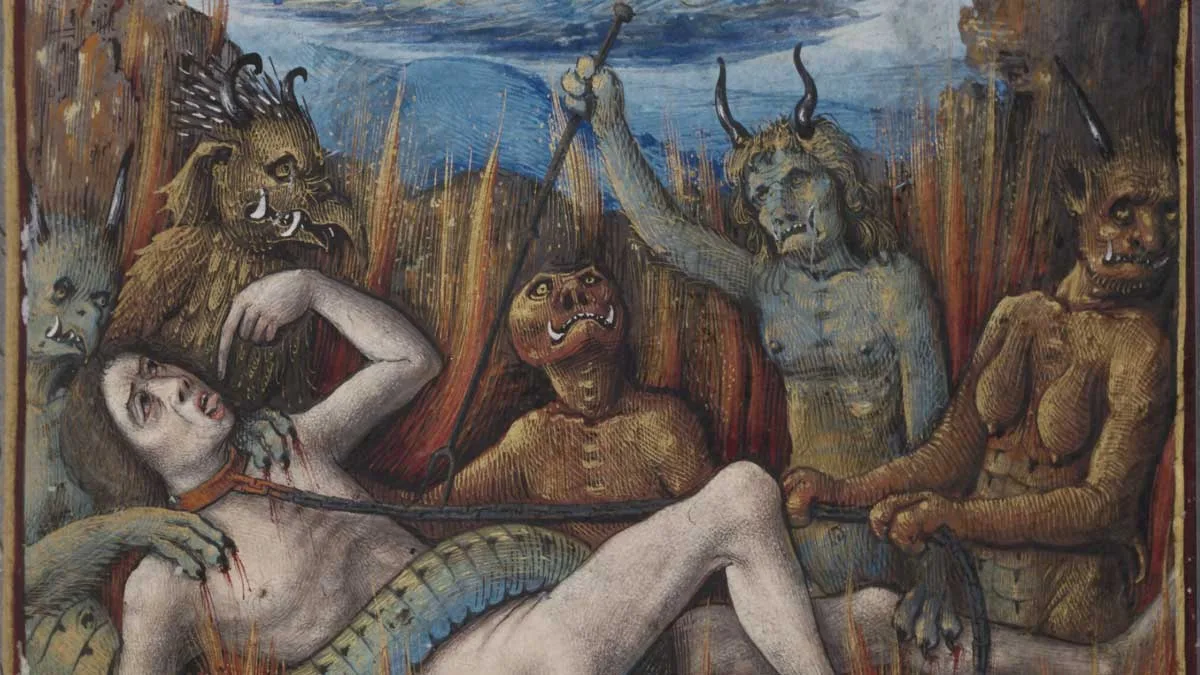 Detail from the Vanderbilt Hours, f. 74r
Calendar
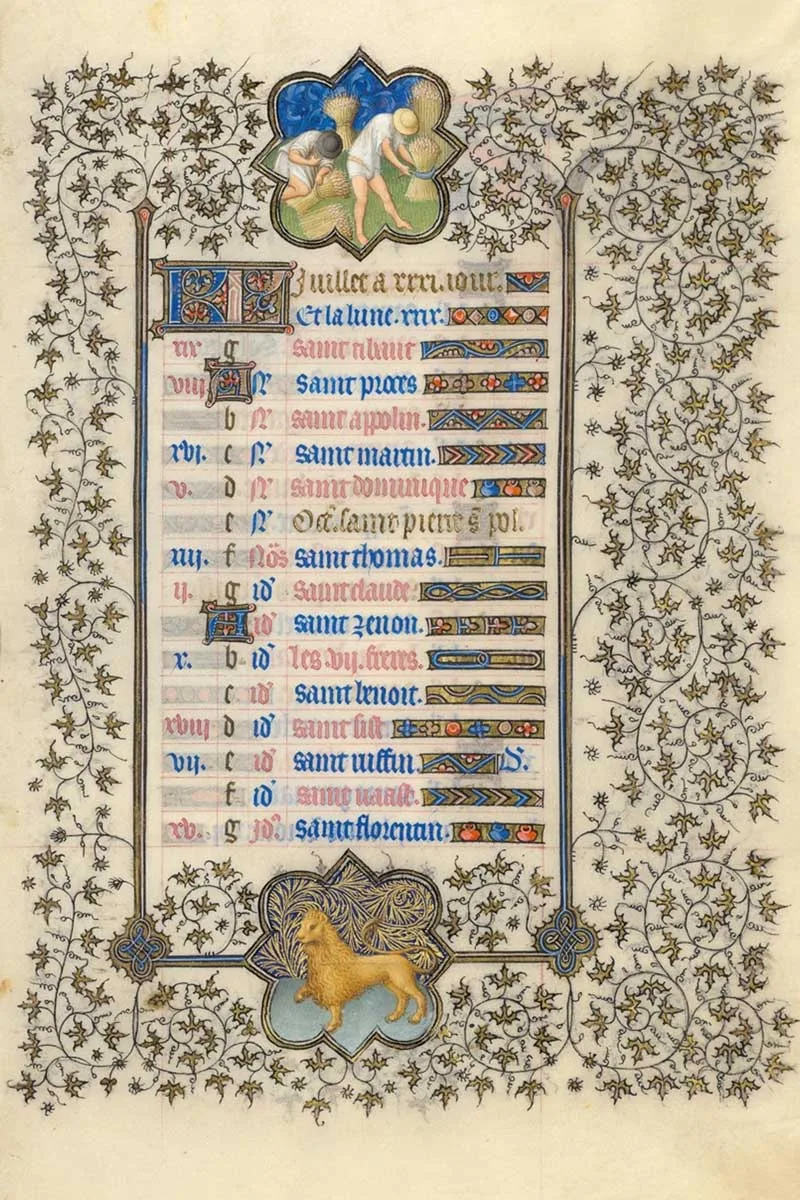
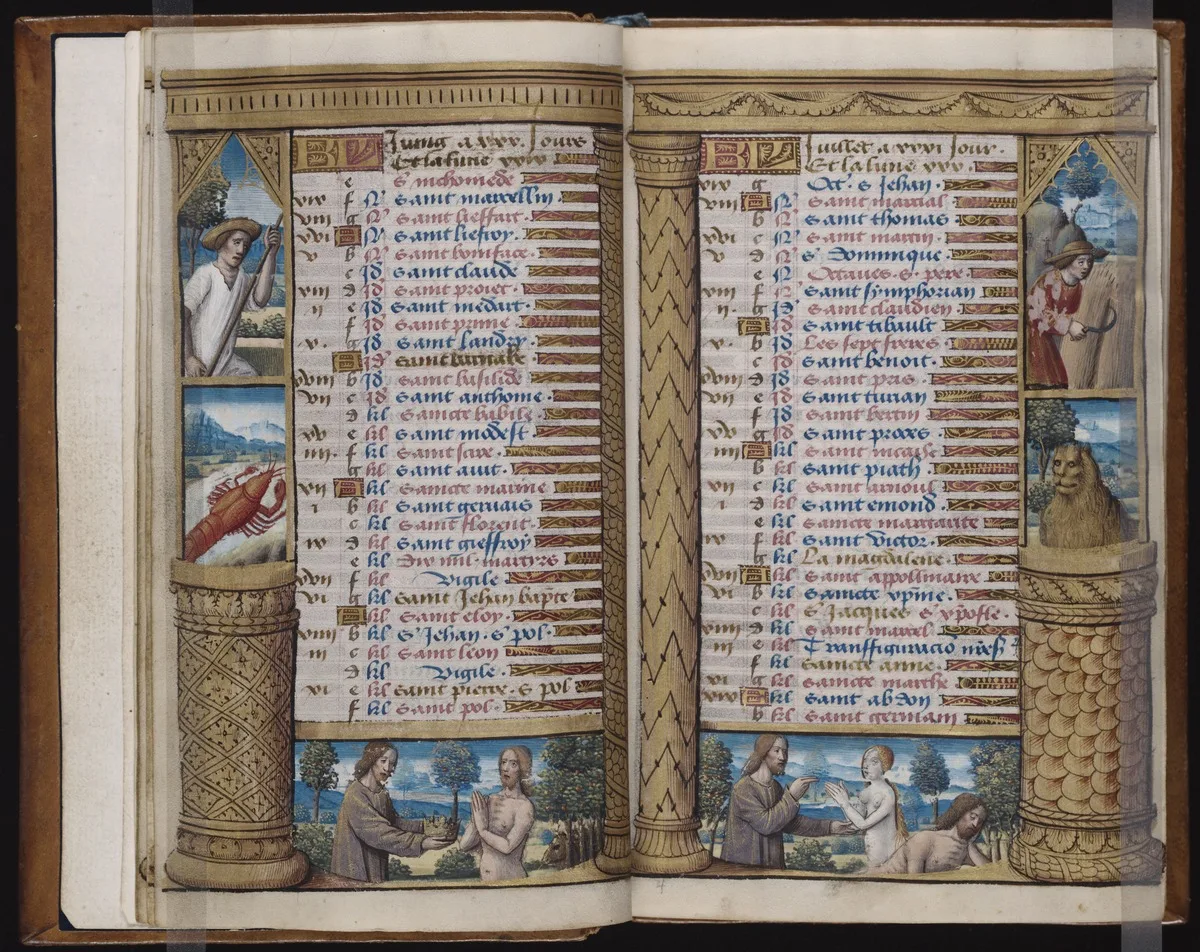
With a list of the saints' days for each month, the Calendar is always at the beginning of the Book of Hours. Important days, such as Christmas or feast days of the Apostles, are usually written in red ("red-letter days" comes from here) or gold. The rest of the saints or festivals are in normal black. It's an often-decorated part of the manuscript — it's easy to find illuminated pages of labours of the month or local activities, along with zodiac signs.
Sequences from the Gospels
Often introduced by an illumination of one of the four Evangelists, this section contains extracts from each Gospel. The Evangelists are commonly shown seated at their desks with their attributes: the angel, bull, eagle, and lion. Saint John may instead appear on the Isle of Patmos, where he received a vision of the Apocalypse and wrote the Book of Revelation.
Prayers to the Virgin
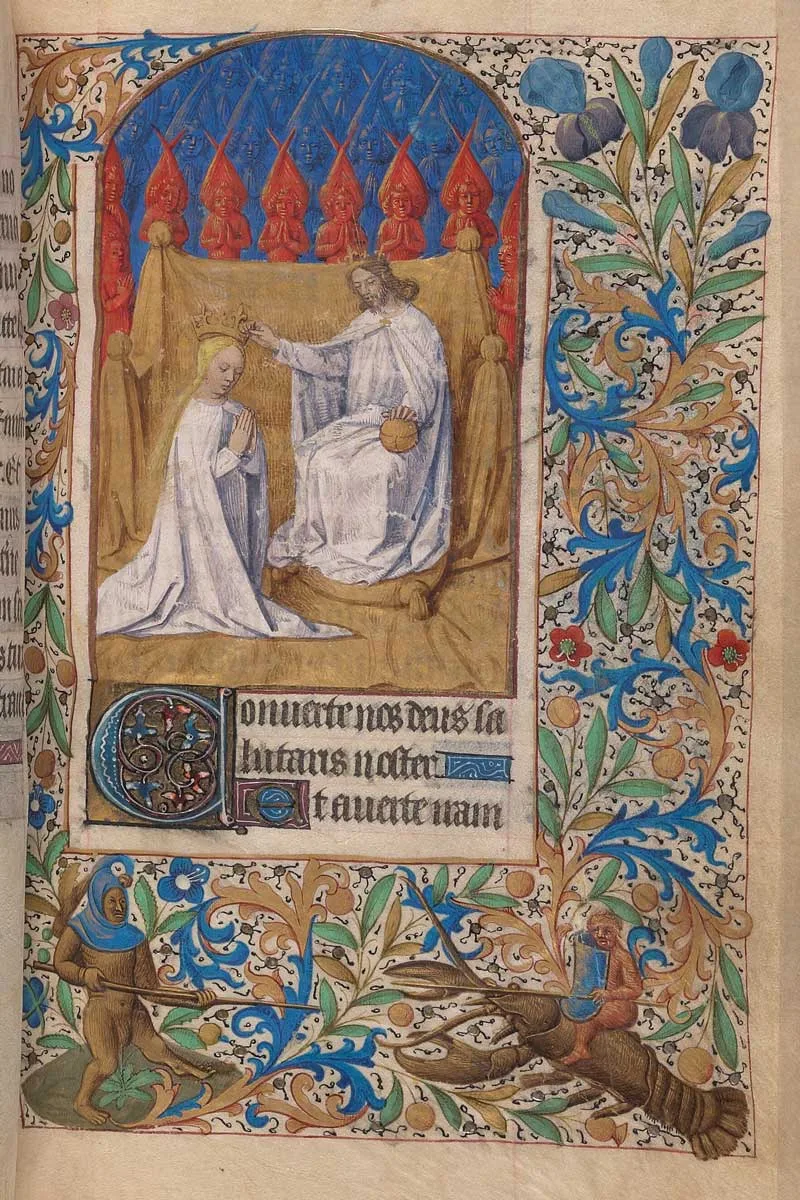
Typical of French Books of Hours, the Prayers to the Virgin were usually introduced by a representation of a Pietà or a Virgin and Child. In this section we can find two prayers: Obsecro te, with the owner of the book kneeling in an illustration nearby, and O intemerata, usually not illustrated.
 |
 |
 |
| Coronation of the Virgin — Beinecke MS 662, Book of Hours, use of Paris, f. 81 | Belles Heures of Jean de France, Duc de Berry, f. 8r, Calendar: summer | The Vanderbilt Hours, f. 74r |
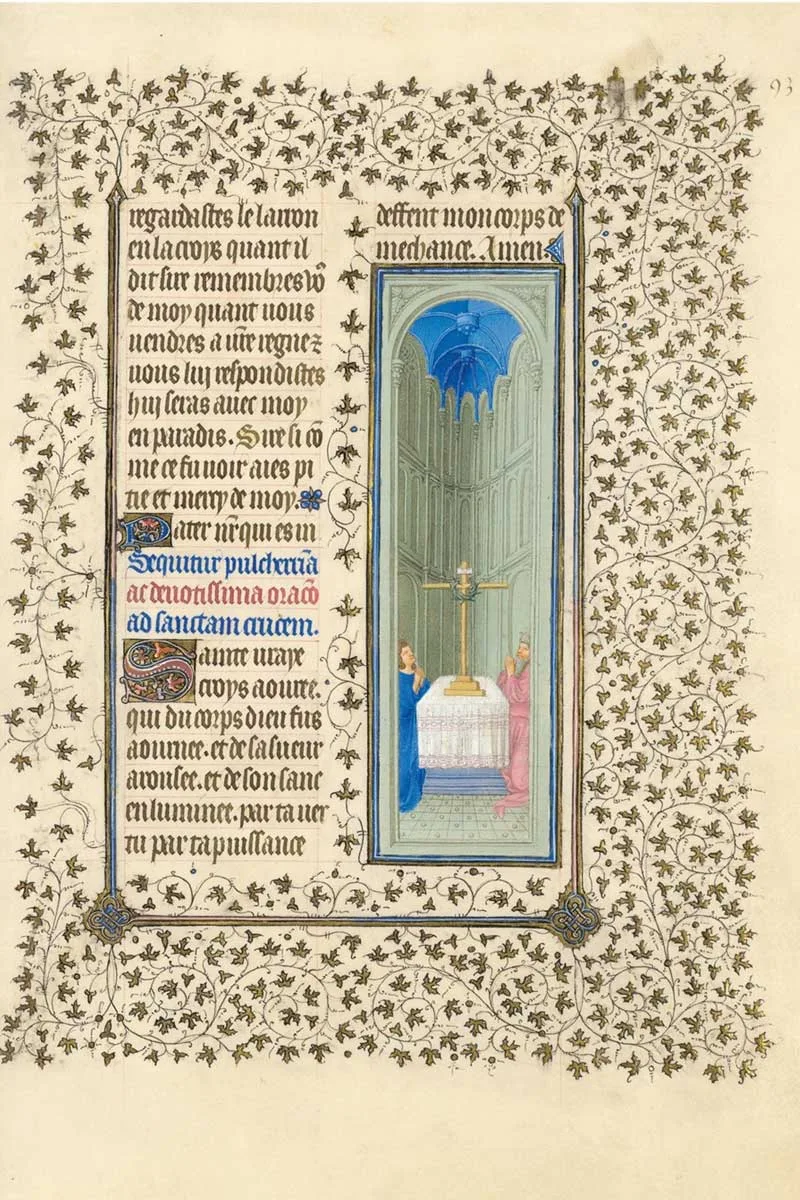 Belles Heures of Jean de France, Duc de Berry, f. 93r, Hours of the Cross
Hours of the Virgin
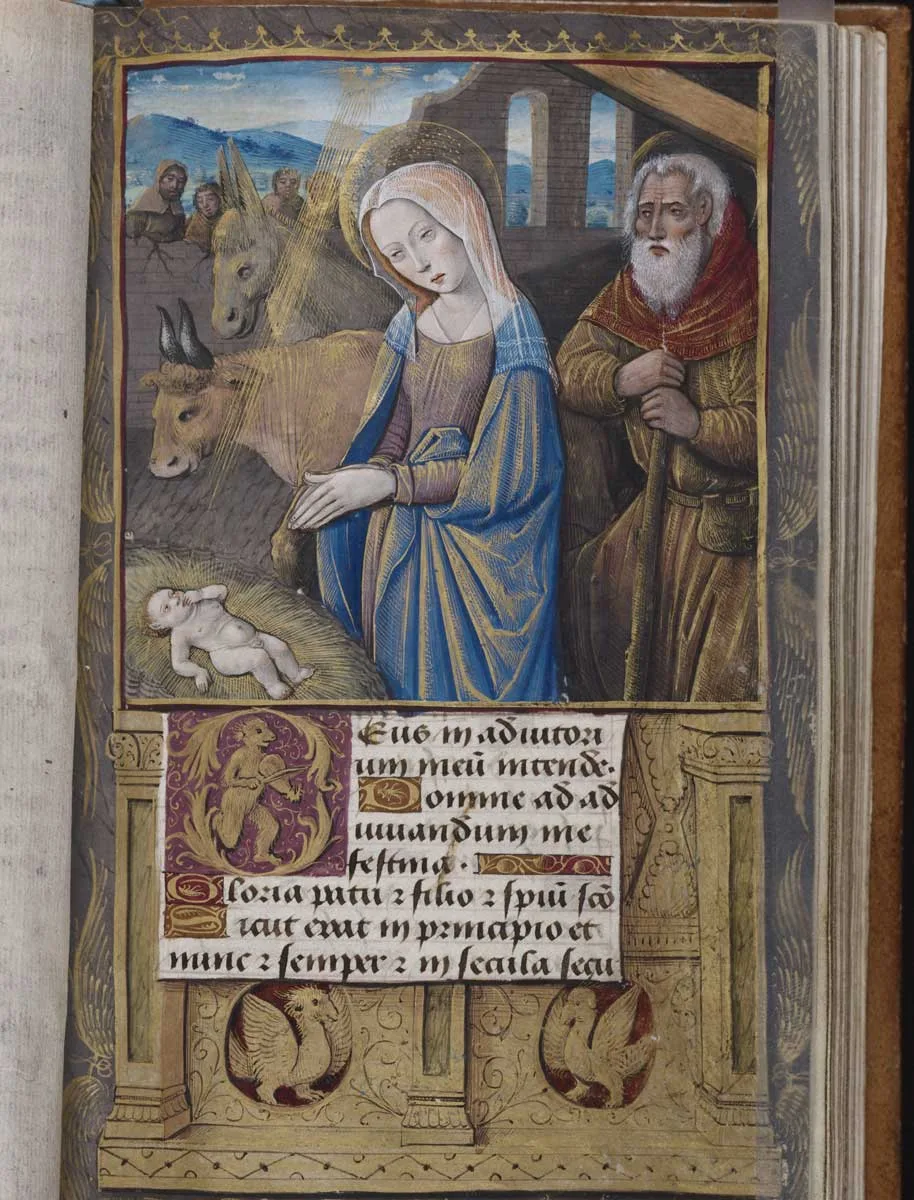
The Hours of the Virgin are central to a book of hours. They contain prayers and psalms for the eight canonical hours: Matins, Lauds, Prime, Terce, Sext, None, Vespers, and Compline. This is often the most richly decorated section, with miniatures representing episodes from Mary’s life.
Hours of the Cross and Holy Spirit
Composed of a hymn, an antiphon and a prayer, these Hours are much shorter compared to the others, with little to no miniatures. The prayers here were used to supplement the standard hourly prayers.
Penitential Psalms
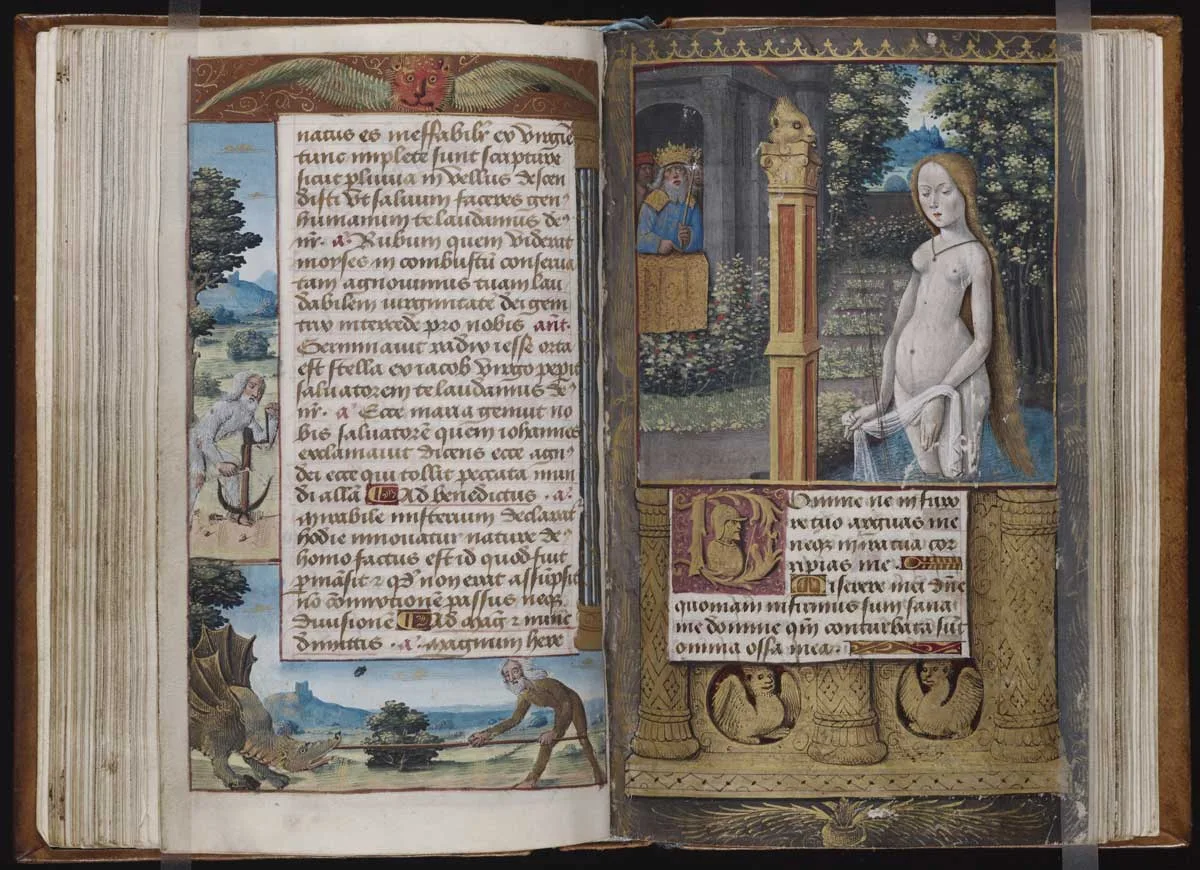
Another core section, the Penitential Psalms often has the most varied miniatures. David commonly appears as the author of the psalms, expressing sorrow for sin.
Litany
The Litany is a prayer for help addressed to the Holy Trinity, the Virgin Mary, the Archangels Gabriel, Michael, and Raphael, and the saints. It leaves little room for decoration.
 |
 |
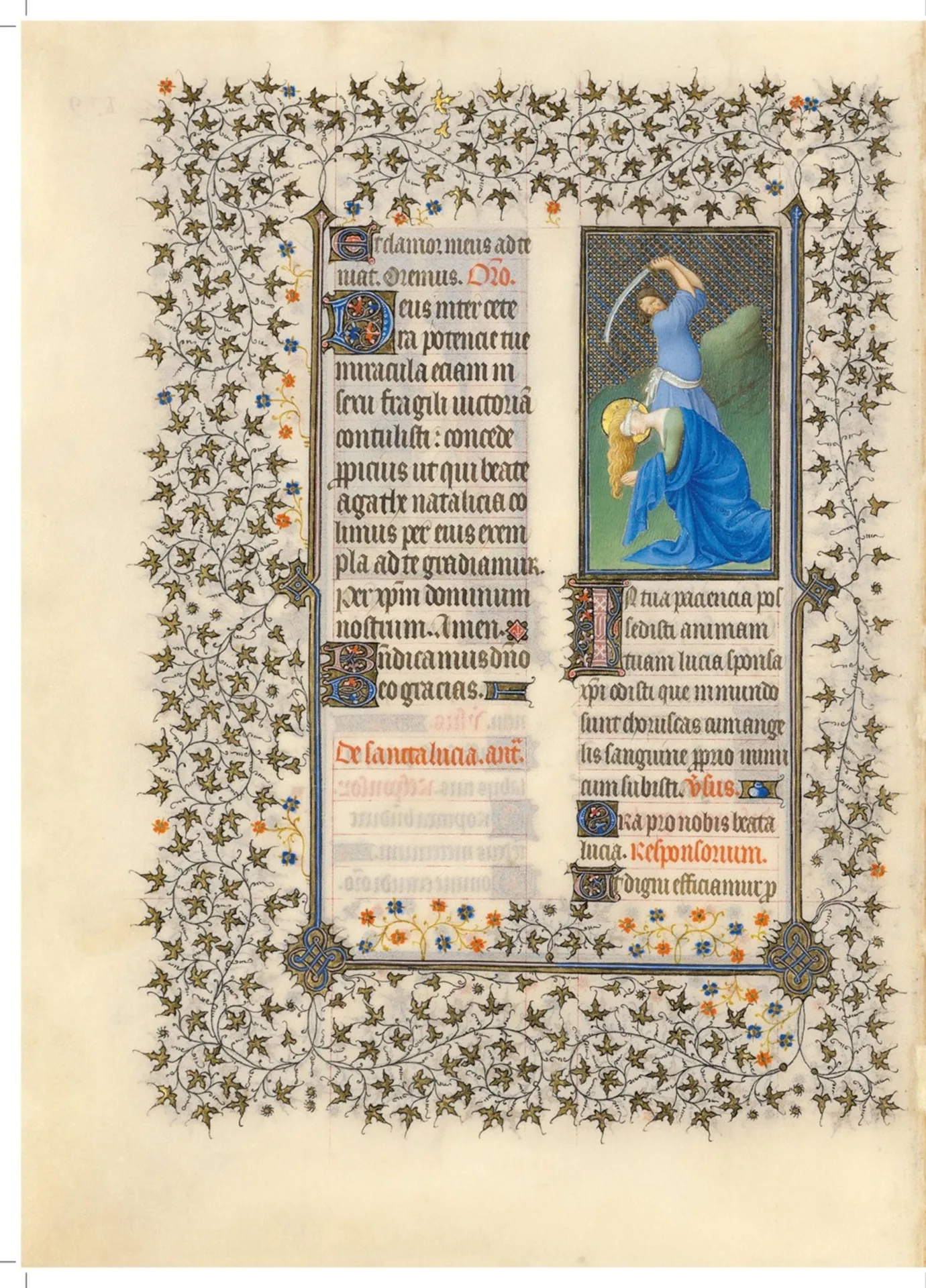 |
| Beinecke MS 436, Vanderbilt Hours, ff. 3v–4r, Calendar, June and July | Beinecke MS 436, Vanderbilt Hours, f. 27r, Nativity | Belles Heures of Jean de France, Duc de Berry, f. 179v, Saint Lucy |
Office of the Dead
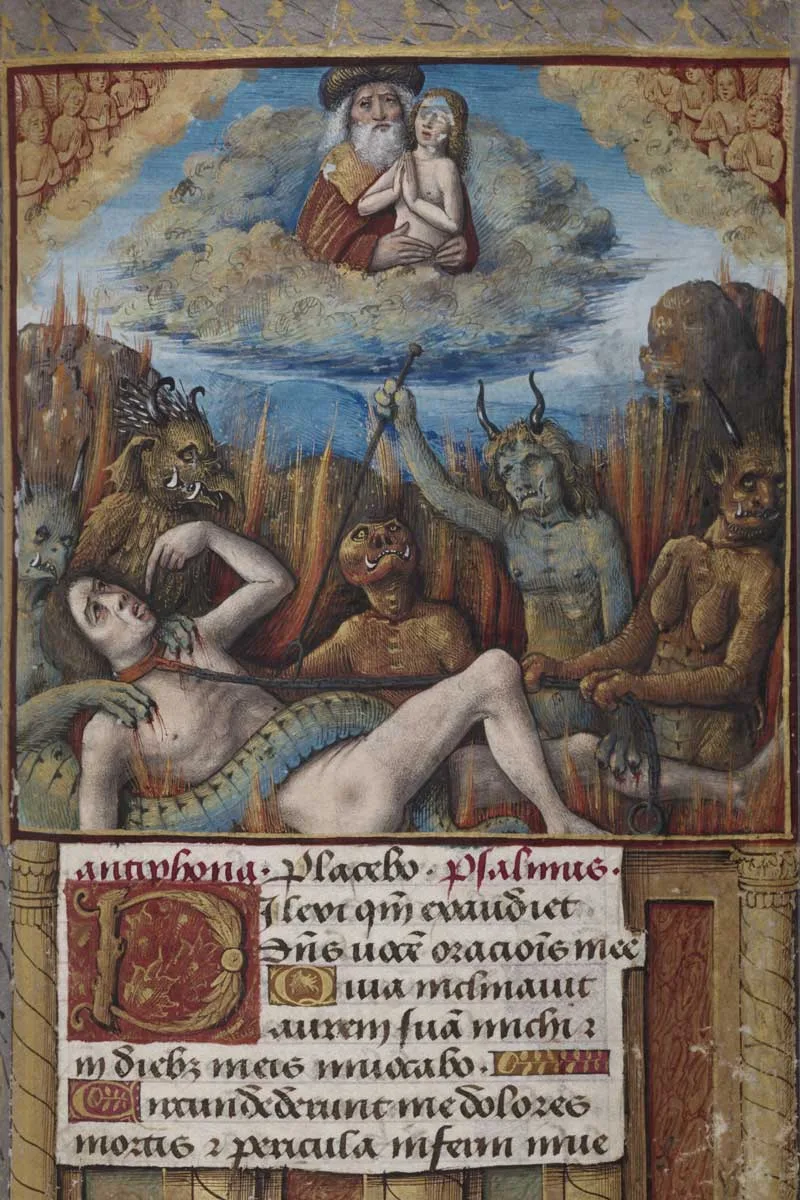
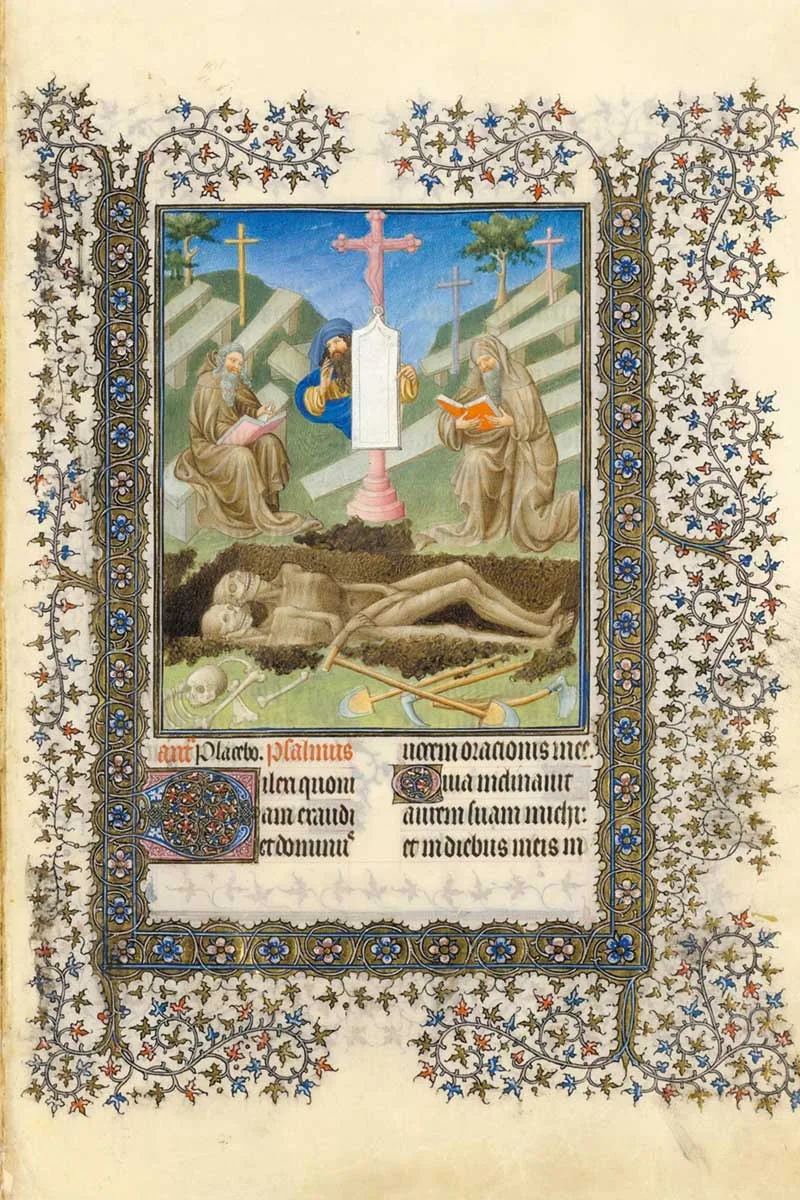
Divided into two parts, Matins for the mornings and Vespers for the evening, the Office of the Dead consists of a series of prayers originally intended to be said over the coffin while it rested in a church. With death being such an important aspect of the medieval period, it's easy to imagine that this section of the Book of Hours is heavily decorated. Skulls, skeletons and memento mori are typical of later Books of Hours; earlier ones usually present the classic Universal Judgement.
The Suffrages
The Suffrages are composed of short devotions with prayers to the Holy Trinity, the Virgin Mary, St. Michael, St. John the Baptist, and the Apostles, followed by an almost always unique selection of saints, represented with their traditional emblems. This is a heavily decorated part of the manuscript.
 |
 |
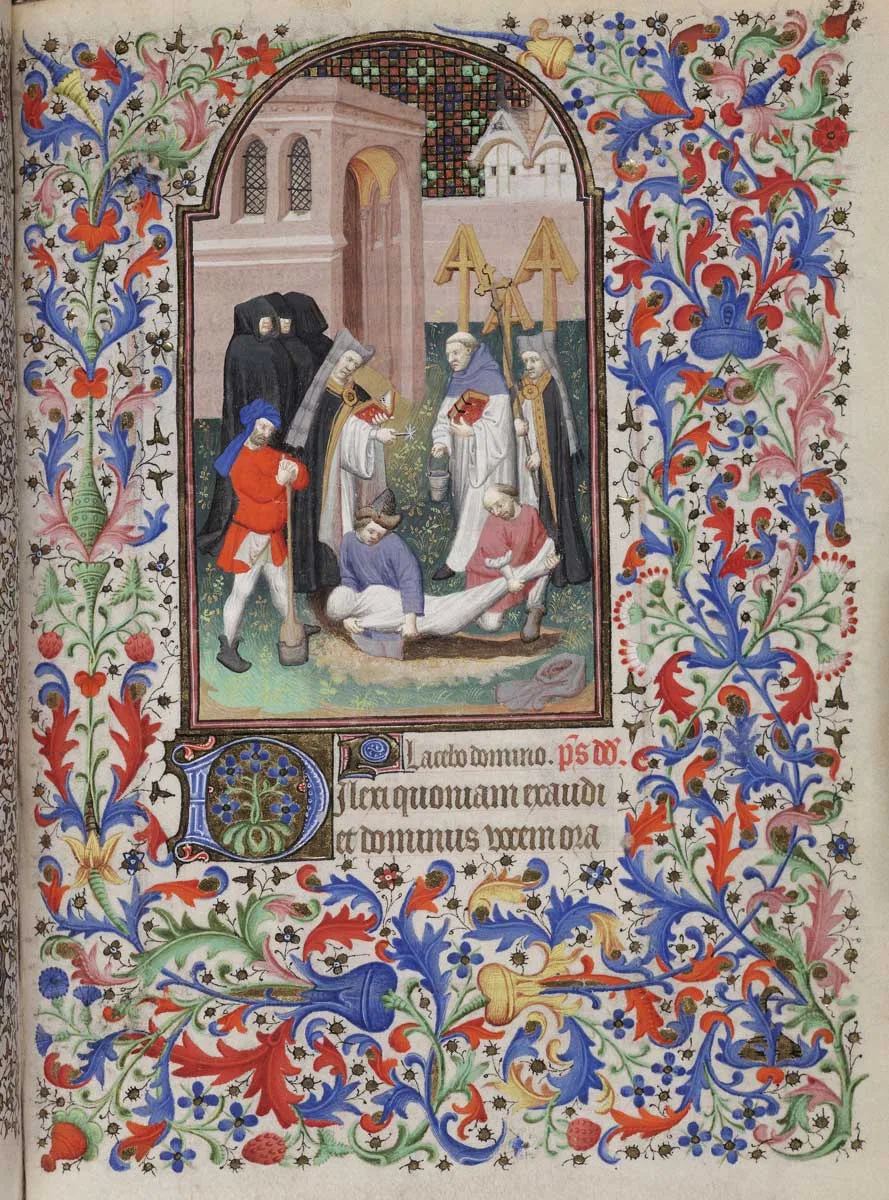 |
| Belles Heures of Jean de France, Duc de Berry, f. 99r, Office of the Dead | Beinecke MS 436, Vanderbilt Hours, ff. 55v–56r, David spying on Bathsheba | Beinecke MS 400, De Levis Hours, f. 130r, Office of the Dead |
Further Reading
On this page we've barely scratched the surface of these manuscripts. We hope we've made you curious and willing to know more about medieval manuscripts in general. Here are some useful resources where you can continue learning about Books of Hours:
- Book of hours — Wikipedia
- The Text of the Hours — medievalist.net
- Introduction to Manuscript Studies — an excellent and complete book to start off with if you're new to medieval manuscripts.
- A History of Illuminated Manuscripts — less technical, easy to read, and explains many details on how books were used in the medieval period.
- Books of Hours (Phaidon Miniature Editions) — focuses on Books of Hours only, small and with fascinating folios from various manuscripts.
- The Hours of Catherine of Cleves: Devotion, Demons and Daily Life in the Fifteenth Century — an impressive book, packed with information about one of the most beautiful Books of Hours.
Also, remember to visit your local library — you'll find hundreds of books on the matter.
Want to browse digitized Books of Hours yourself? Yale's Beinecke Rare Book & Manuscript Library — home to the Vanderbilt and De Levis Hours pictured above — is one of hundreds of collections on the DMMapp.