Beneventan Script
The Origin of the Name “Beneventan”
The name Beneventan comes from the script’s main centers of production in the duchy of Benevento in southern Italy: Monte Cassino, Bari, and Benevento itself. The monastery of Monte Cassino, founded by St. Benedict, was especially influential. Through Benedictine scriptoria, the script spread as far as Dalmatia, in present-day Croatia.
Before the work of paleographer Elias Avery Lowe, the script was known as Longobarda or Longobardistica. Those names associated it with the Lombards. Lowe established the name by which the script is known today: Beneventan.
Did you know? Elias Avery Lowe was the great-grandfather of Boris Johnson.
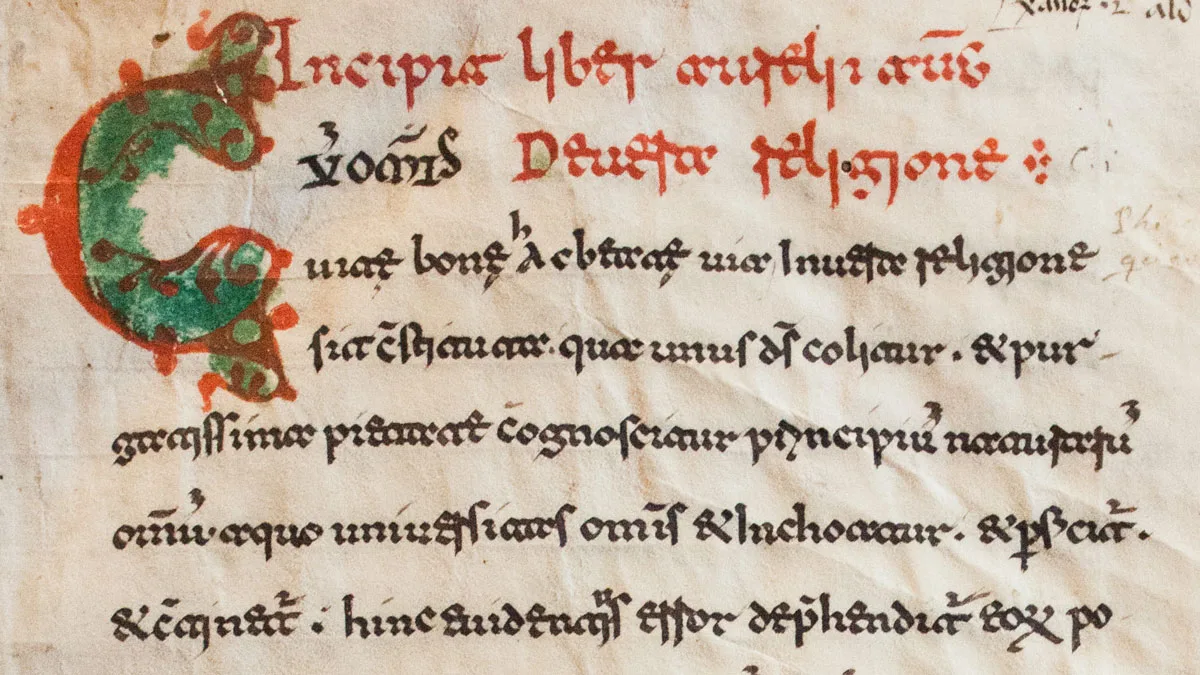 Beneventan Script sample from Monte Cassino.
(Very) Brief History of the Beneventan Script
The script can be traced to the middle of the eighth century. It remained in use in southern Italy and Dalmatia until the thirteenth century and survived in smaller communities until the fifteenth century. Because it changed little over that long period, dating manuscripts written in Beneventan can be difficult.
The Exultet Rolls
Most surviving examples of Beneventan script are liturgical materials, including Exultet rolls. On the eve of Easter, a deacon dressed in white sang the “Exultet” from a roll. Its name comes from the incipit:
exultet iam angelica turba caelorum…
In English:
the heavenly crowd of angels shout for joy...
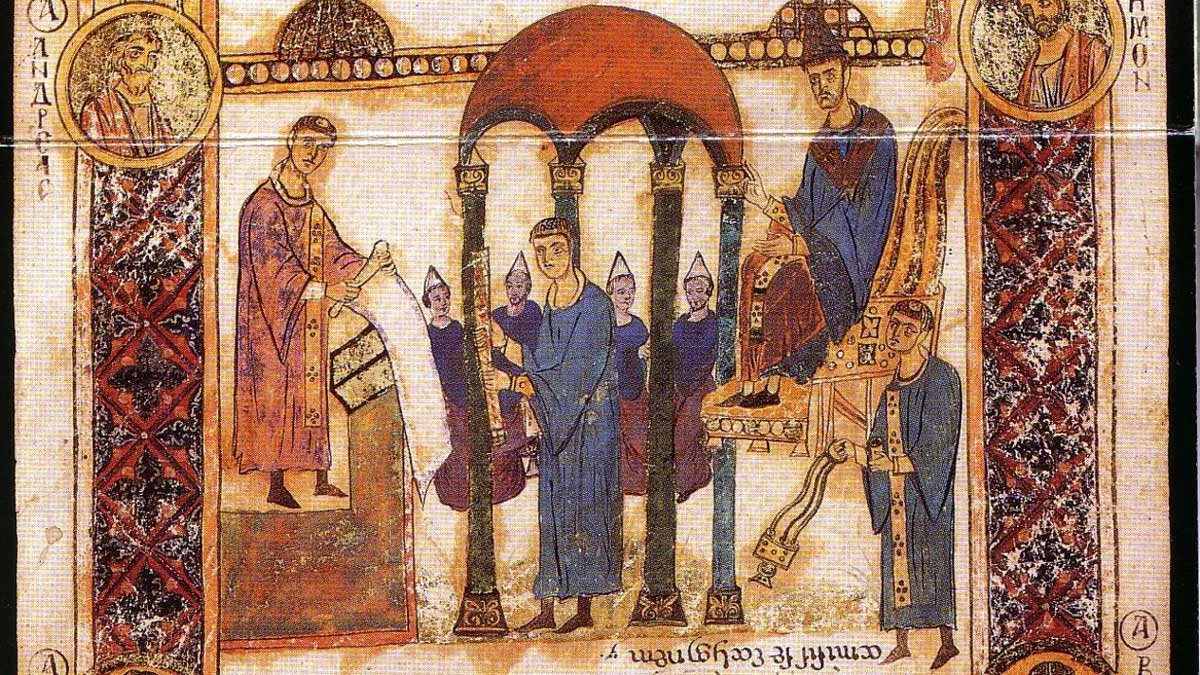 From the Bari Exultet Roll. On the left you can see the Deacon unravelling the scroll from the altar. At the bottom, you can see the script, written upside down. Notice also the particular full stop at the end of the text.
An Exultet roll also includes decorations and illustrations that appear upside down in relation to the text. The priest unfurled the roll from the altar toward the congregation. This allowed the celebrant to read the text while people in the congregation could view the images as the roll was opened.
Beneventan Palaeography
Beneventan script is relatively easy to recognize once you know its letterforms. The letters “a” and “t” are especially distinctive. The “a” resembles a joined “oc,” while the similar “t” has a flat top stroke. The “e” and “r” also have characteristic forms. This alphabet sample is more useful than a description alone:
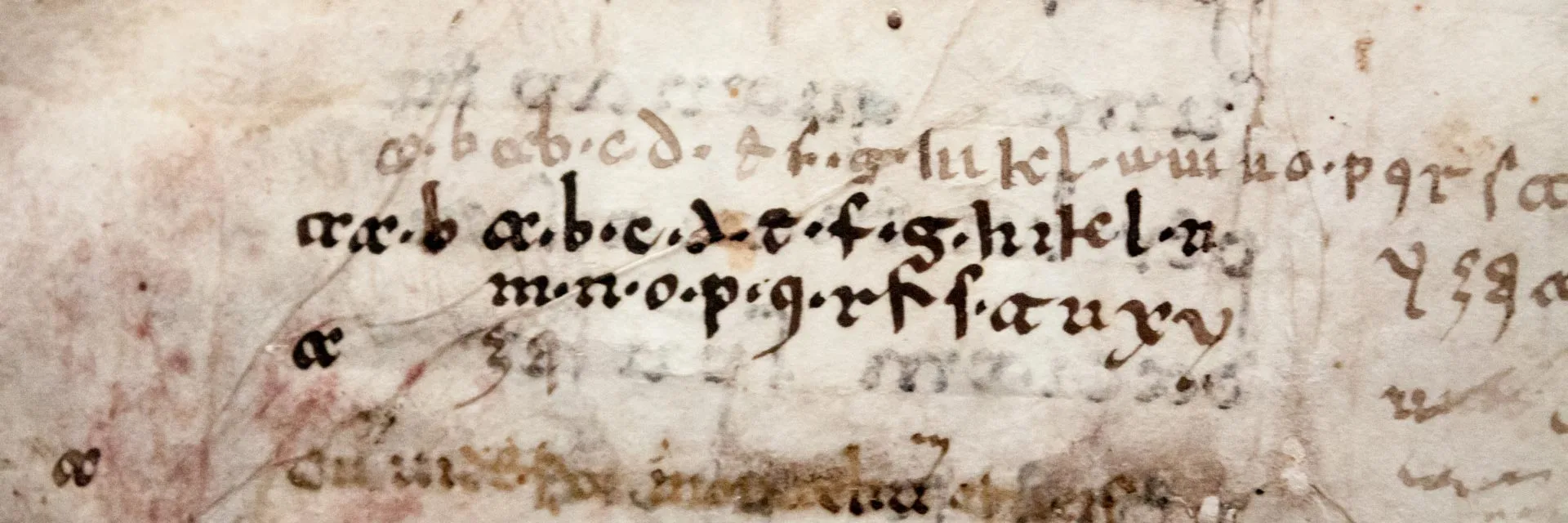 Sample of Beneventan script from Monte Cassino — cod. Casin. 269, p. 352.
Beneventan also uses many ligatures, such as “et,” “ex,” and “ri,” as well as nonstandard abbreviations. Its standardized punctuation includes a two-point mark and a comma that can serve as a modern full stop. Together, these features make the script recognizable but initially difficult to read.
Further Reading
There is much more to learn about this script. These books offer a useful place to continue:
- The Scriptorium and Library at Monte Cassino, 1058–1105 (Cambridge Studies in Palaeography and Codicology) — the definitive study on Beneventan Script, 400+ folio pages covering every aspect of it. You might want to pick it up from your local library rather than buying it.
- Introduction to Manuscript Studies — recommended if you want to know more about medieval manuscripts in general: production, decoration, and general information. It has a chapter on selected scripts, including the Beneventan Script.
- The Beneventan Script: A History of the South Italian Minuscule — written almost a century ago, still extremely useful and interesting. This is the book that gave the name "Beneventan" to this script, previously known as Longobardistica.
Last edited: February 2017.
Want to see Beneventan manuscripts yourself? Monte Cassino's digitized collection is one of hundreds on the DMMapp.