It's Xmas time! Christmas songs and carols everywhere! In this newest instalment of The Adventures of Medieval Killer Bunny we are going to look at what the medieval bunnies are planning for theholidays! Like everyone, also they sometimes need some relaxation and fun, and most importantly, a break from their killer jobs; and since we are sure you have heard "Jingle bells" and "Joy to the World" for the past month or so, it is only appropriate that in this post we will meet the Musical Killer Bunnies.
Yesterday we showed you how the Utrecht Library is brilliantly promoting a manuscript of great importance in the Netherlands. Today we are bringing your attention to how Switzerland is skillfully managing the digitization of all its collections on e-codices.
You are probably aware of e-codices already:
e-codices offers free online access to medieval and early modern manuscripts from public and church-owned collections as well as from numerous private collections.
What do you do with a super-awesome manuscript like the Utrecht Psalter? You make a super-awesome website to go with it. Not only: you make super-awesome YouTube videos to promote it, and catchy animations so that also casual visitors will be intrigued by what is being shown; plus you make sure that you spread the word on the right social media channels to gain visibility.
This is exactly what the University of Utrecht (Universiteit Utrecht) has been doing. A message appeared recently on our Facebook page:
The Utrecht Psalter, currently owned by the Utrecht University Library, has just been nominated for UNESCO's Memory of the World Register. In 2015, UNESCO will decide whether the medieval manuscript will be given a place in this documentary heritage register. Dating back to the ninth century, the Utrecht Psalter is one of the most valuable manuscripts held in a Dutch collection. Check the new website (with complete digitized version of the psalter): www.utrechtpsalter.nl
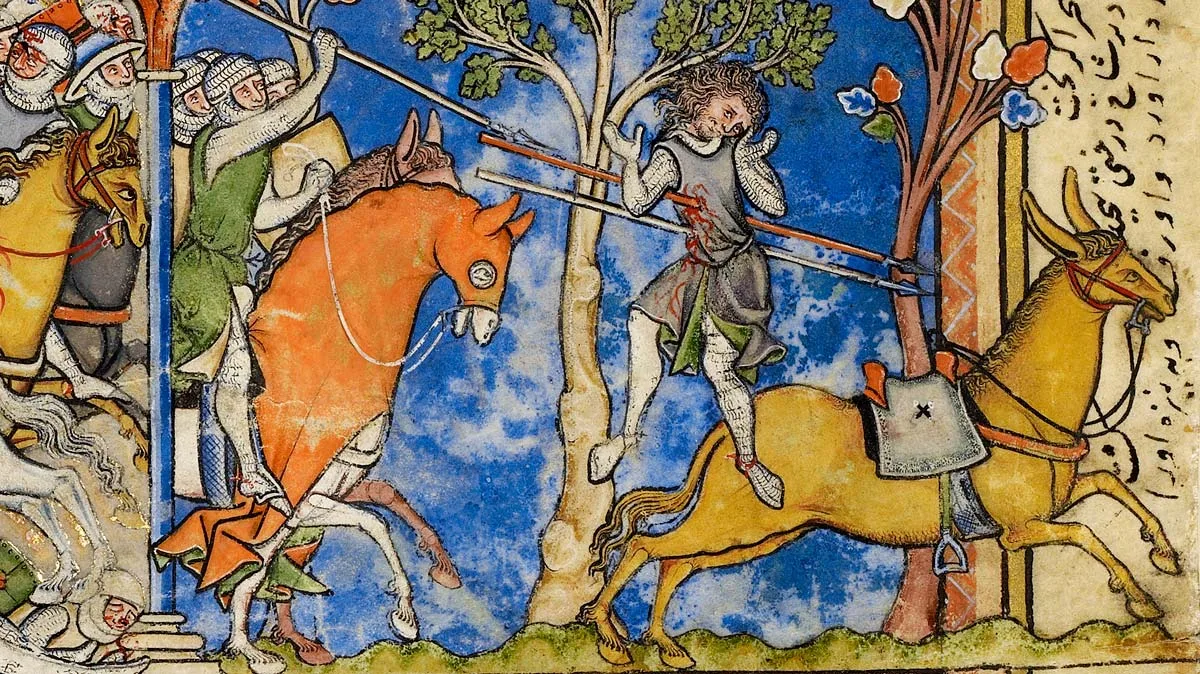
The manuscript that we want to highlight for you today is the Morgan Library’s Crusader Bible. It is also known as the Morgan Picture Bible, the Maciejowski Bible or the Shah ‘Abbas Bible. The book is an Old Testament that was originally made with only miniatures to tell the stories. Later, inscriptions in Latin, Persian and Judeo-Persian were added.
According to the Morgan Library, it is not only one of the most awesome and beautiful manuscripts they own, but also one of the highlights of French Gothic illumination.
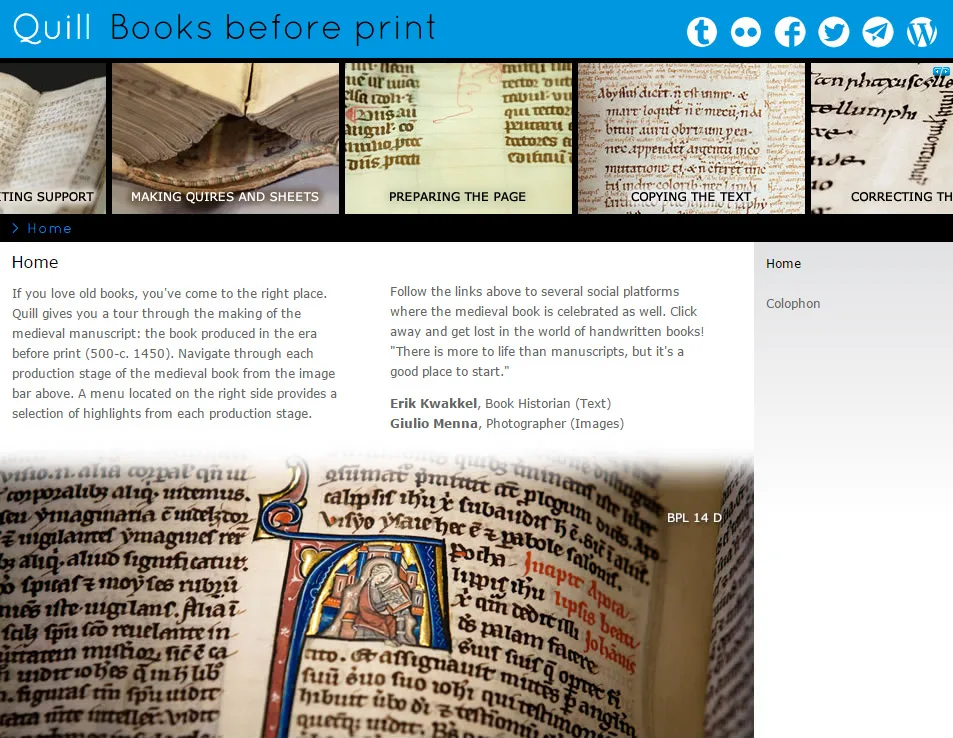
As you surely know, "Quill" was recently launched. Quill is a website a new website for medieval manuscript lovers put together by Dr. Erik Kwakkel, who had the idea, took care of the texts and made sure it'd be a success, and I, who had the pleasure of taking care of the photos. Erik put together a fantastic blog post about it, to which I contributed too. I ended up writing a bit too much for it, so it had to be reduced a bit in length in the end.
A super-cool website about medieval manuscripts has gone online today!
"This is to alert you to a new product of the "Turning Over a New Leaf” project: a website (in English) devoted to the medieval manuscript, aimed at a non-expert audience: https://quill.leiden.edu/. Some sixty web pages take you through the different production stages of the manuscript, and highlight important facets of the book before print. Short explanatory texts are paired with beautiful photographs, produced by Giulio Menna, professional photographer and co-producer of the website.
Quill went live today and was two years in the making. It was produced with funding of De Jonge Akademie, logistical support of Leiden University Centre for the Arts in Society (LUCAS), and with generous help of Leiden University Library, Special Collections."
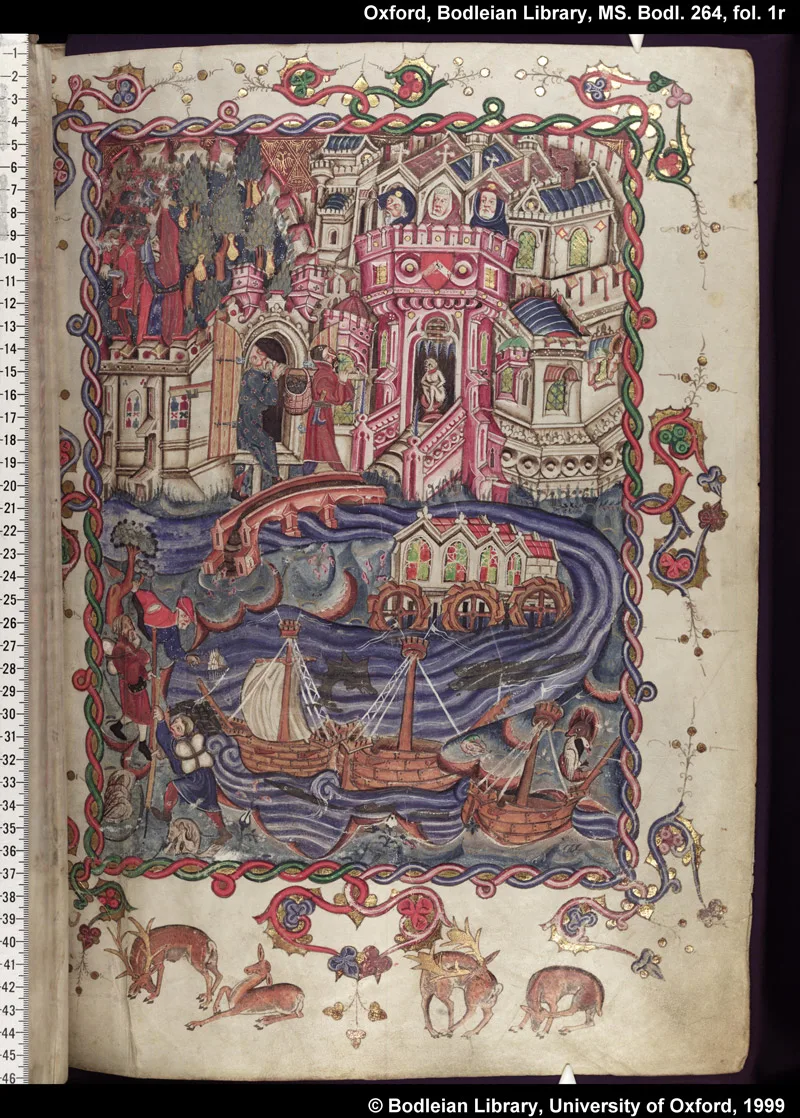
This morning a woke up to an email from my father. It was an article from the digital edition of his favorite Italian newspaper. The title of the article is: 'Il sovrano che Unì Est ed Ovest', or: The Sovereign that United East and West. Unfortunately the newspaper's app shares the article, but excludes the author's name from it, but it's dated 20/07/14.
The article carefully explains how the three books contained in Oxford Bodley 264 (and a facsimile created byIstituto dell’Enciclopedia Italiana) are connected.
June has been a productive month for the DMMmaps project: we were at the DH Benelux Conference in The Hague, Netherlands, presenting this project, but we have also received many new links to that were added to the database. So, without further ado, let's present the additions:
Since the last couple of years, more and more universities are participating in collaborations where they create so-called MOOCs (Massive Open Online Courses). These are a way for anyone that is interested to participate in open-access, free from costs university courses. The courses are basically on any kind of subject you can think of: from art and history to literature, computer science and medicine. You can find lists of courses on pages like Coursera and Futurelearn. I just finished a six-week course on Futurelearn by the University of Southampton about the archaeology of the old Roman port of Rome, Portus. My experiences with this were so good, I decided to also enroll for England in the time of King Richard III which is offered by the University of Leicester also on Futurelearn.
One of the biggest news items in the field of archaeology last year was the discovery and identification of the (in)famous King Richard III under a parking lot in Leicester. Now, the University from this same city has created a six-week course starting coming Monday 30th of June about all sorts of aspects of the time of this King of England.
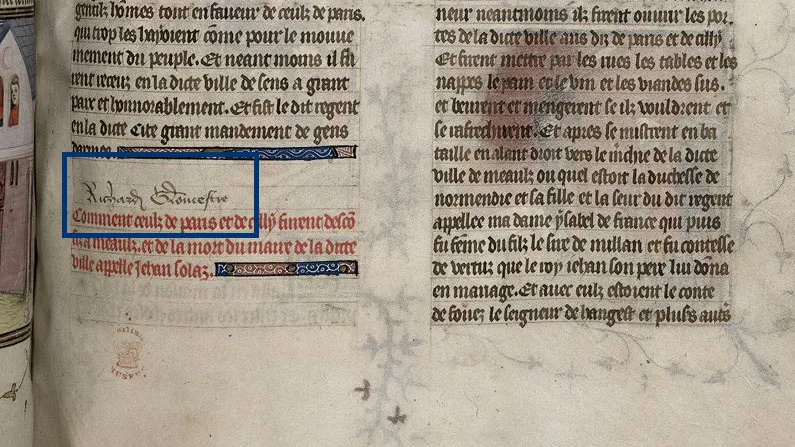
You might wonder, however, how this connects to codicology and medieval manuscripts. Richard III was a medieval king during a time of change in the field of book history. Handwritten books were less produced and printing was on the rise. This English king might not have had one of the most famous libraries, but nevertheless a very important one. He was one of the few people in high society of those days that signed his books.