Skip to content

Digital Humanities

Happy New Year!

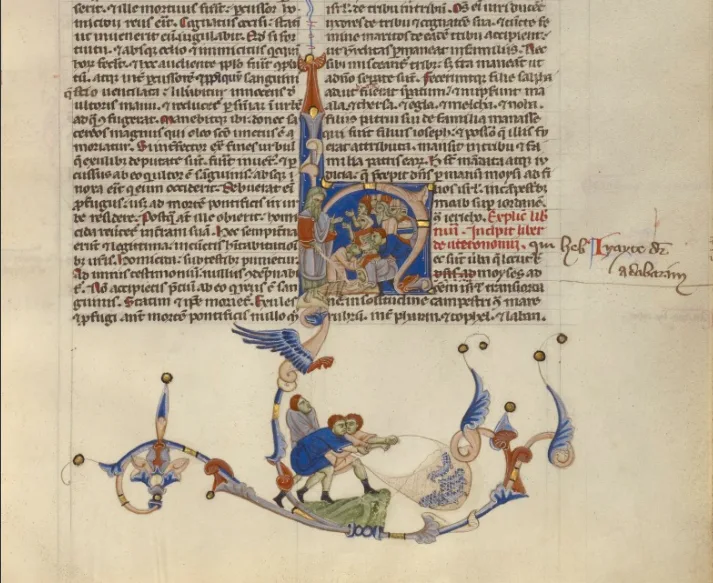
Dear Sexy Codicologists, We would like to wish everyone of you the best for this 2020! At  the same time we would like to thank everyone for their continued support for our projects. We have set some great goals for ourselves and the DMMapp / Sexy Codicology Blog for this year. Thank you, from the bottom of our hearts, for making all of this possible. Let's make this a great year! The Sexy Codicology Team  Unknown Abbey Bible, about 1250–1262, Tempera colors, gold leaf, and ink on parchment covered with oak boards backed in white alum-tawed pigskin Closed: 27 × 19.7 cm (10 5/8 × 7 3/4 in.), Ms. 107 (2011.23) The J. Paul Getty Museum, Los Angeles, Ms. 107
Some time ago we published a blog post showing how broken links to digitized repositories on the DMMapp were a problem, causing them to become inaccessible to users. This was a major problem for us: Researchers count on the DMMapp to find and access digitized colletctions, and it is obviously a major blow to the project if they cannot achieve the one thing they came there to do. Also users that simply want to explore collections can easily get frustrated if they stumble upon broken links.

IIIF - The digitized manuscripts revolution we've all been waiting for!

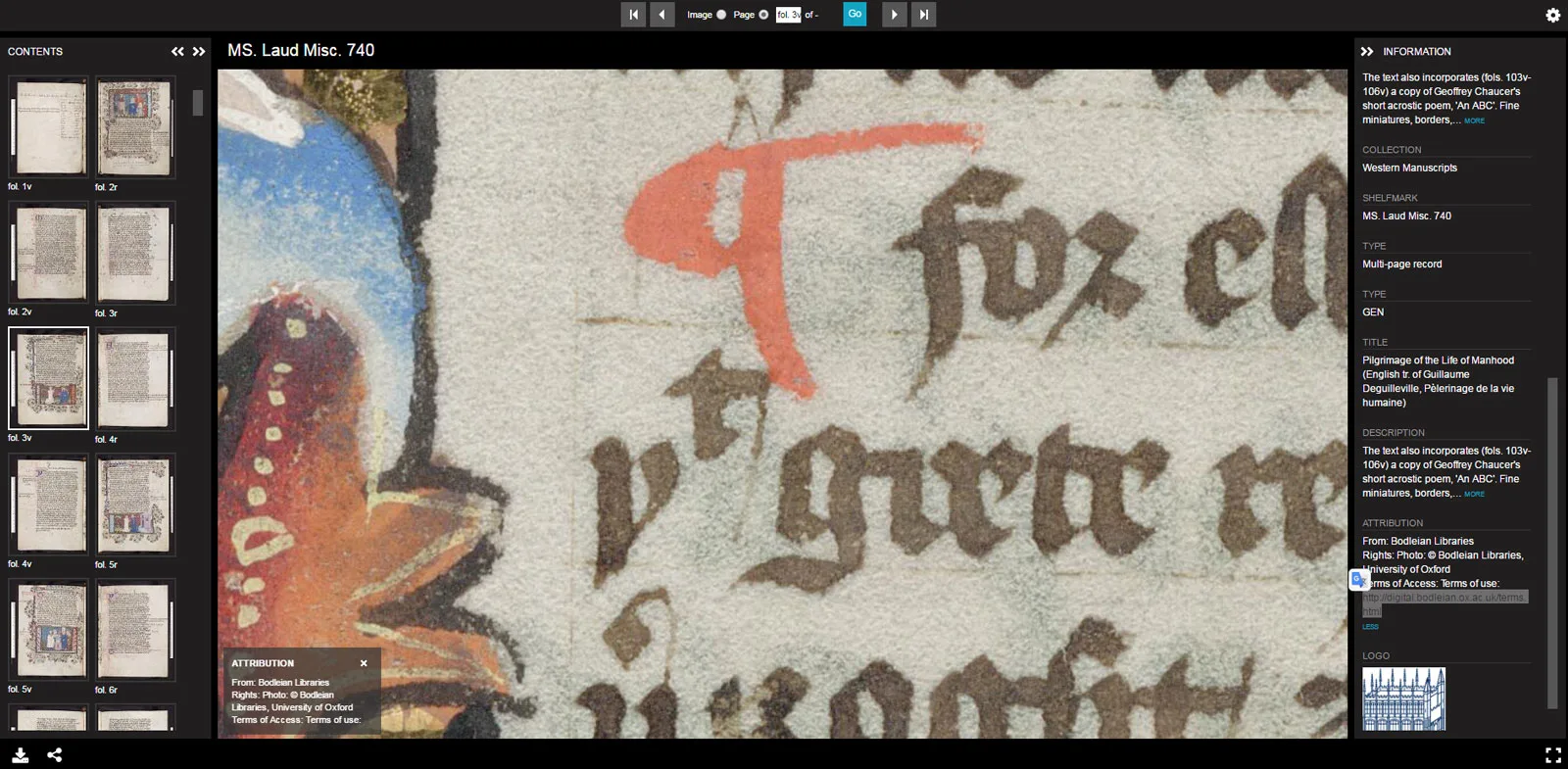
We created the DMMapp to make it easier for you to find collections of digitized manuscripts - and IIIF is making it easier for you to view, study, and compare manuscripts. In this post we are going to tell you all about why it’s awesome! In 2011, a group of international libraries and universities (Stanford University, The British Library, Bodleian Libraries, The Bibliothèque nationale de France, the National Library of Norway, Cornell University, and Los Alamos National Laboratory Research Library) set up the International Image Interoperability Framework, or, in short, IIIF (pronounced as triple-I-F). IIIF example from the Bodleian Library