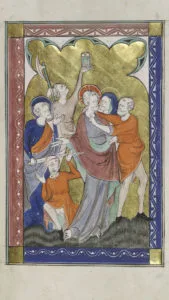
In December 2017 the Parker Library announced in a blog post that, soon, they would be launching their revamped website. Fast-forward to January 2018 and the Parker Library (Corpus Christi College) in Cambridge indeed launched their new website, Parker on the Web 2.0, made in cooperation with Stanford University Libraries.
The improvements are many, but the biggest, and most exciting, is that now everyone can access their digitized manuscripts freely in high-resolution, without needing an institutional license.
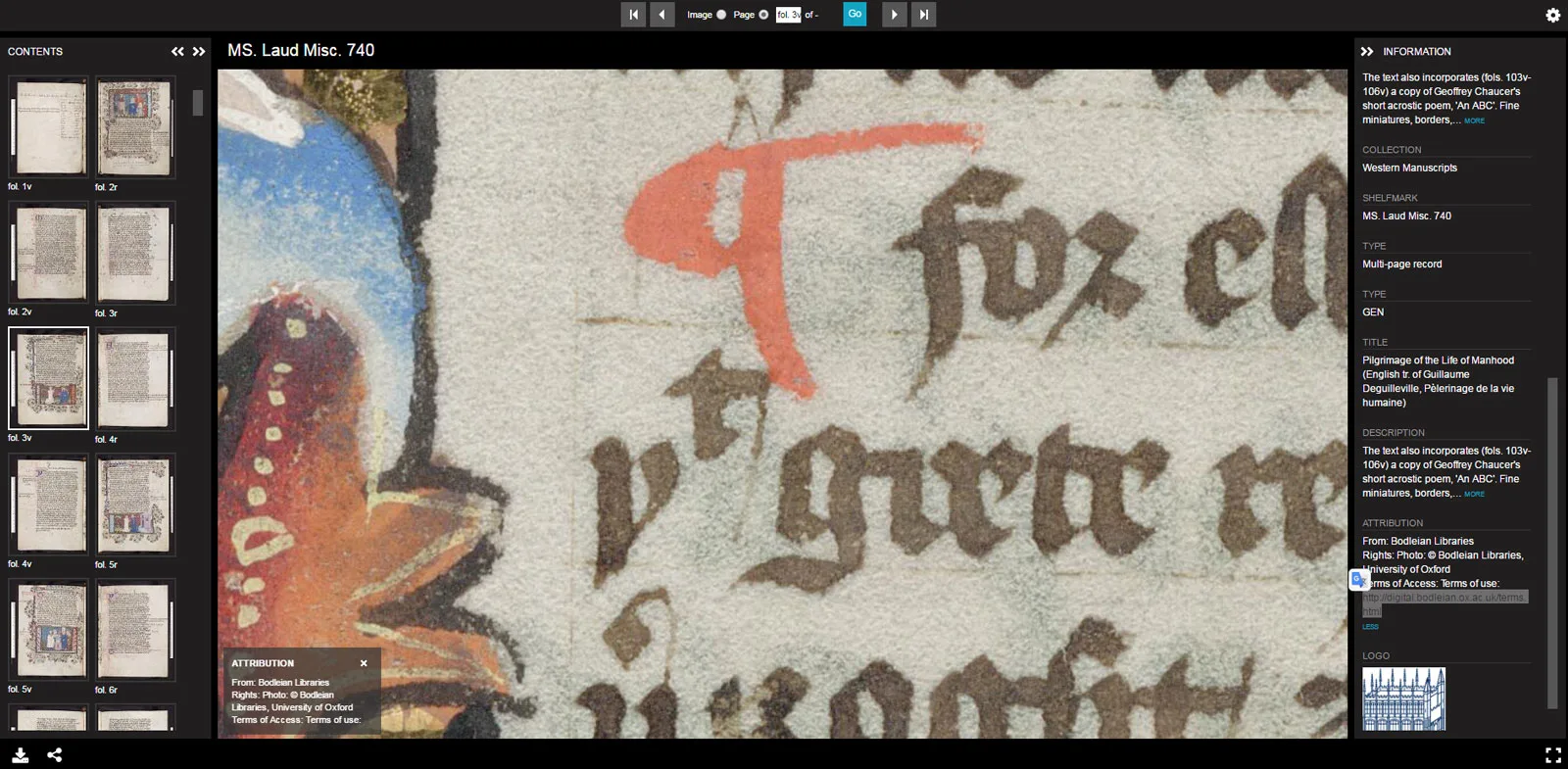
We created the DMMapp to make it easier for you to find collections of digitized manuscripts - and IIIF is making it easier for you to view, study, and compare manuscripts. In this post we are going to tell you all about why it’s awesome!
In 2011, a group of international libraries and universities (Stanford University, The British Library, Bodleian Libraries, The Bibliothèque nationale de France, the National Library of Norway, Cornell University, and Los Alamos National Laboratory Research Library) set up the International Image Interoperability Framework, or, in short, IIIF (pronounced as triple-I-F).
As someone who loves manuscripts and medieval culture, you might one day end up in Belgium, exploring Flanders, and you might go to Bruges, which was flourishing in the Middle Ages. The area has produced countless beautiful manuscripts with a very typical and recognizable style of illuminations now preserved at the Public Library of Bruges.
Bruges’ golden days were in the Middle Ages when it was a very prosperous harbor city that attracted many merchants. The historical city centre today is still much like it was in the Middle Ages which makes it an amazing place to visit for every medievalist (or everyone. Period).
While you are there, there is also a library you should visit: the Openbare Bibliotheek Brugge (OBB) - Public Library of Bruges and its extensive collection, which you can visit here or here.
It's Xmas time! Christmas songs and carols everywhere! In this newest instalment of The Adventures of Medieval Killer Bunny we are going to look at what the medieval bunnies are planning for theholidays! Like everyone, also they sometimes need some relaxation and fun, and most importantly, a break from their killer jobs; and since we are sure you have heard "Jingle bells" and "Joy to the World" for the past month or so, it is only appropriate that in this post we will meet the Musical Killer Bunnies.
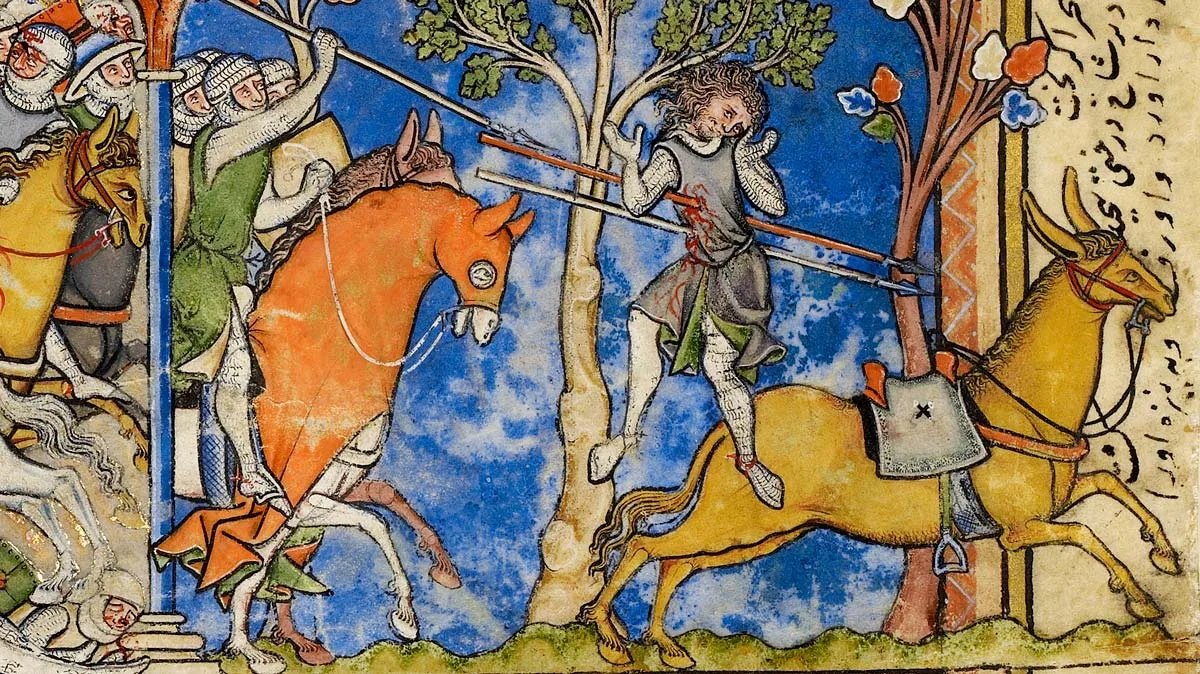
The manuscript that we want to highlight for you today is the Morgan Library’s Crusader Bible. It is also known as the Morgan Picture Bible, the Maciejowski Bible or the Shah ‘Abbas Bible. The book is an Old Testament that was originally made with only miniatures to tell the stories. Later, inscriptions in Latin, Persian and Judeo-Persian were added.
According to the Morgan Library, it is not only one of the most awesome and beautiful manuscripts they own, but also one of the highlights of French Gothic illumination.
Since the last couple of years, more and more universities are participating in collaborations where they create so-called MOOCs (Massive Open Online Courses). These are a way for anyone that is interested to participate in open-access, free from costs university courses. The courses are basically on any kind of subject you can think of: from art and history to literature, computer science and medicine. You can find lists of courses on pages like Coursera and Futurelearn. I just finished a six-week course on Futurelearn by the University of Southampton about the archaeology of the old Roman port of Rome, Portus. My experiences with this were so good, I decided to also enroll for England in the time of King Richard III which is offered by the University of Leicester also on Futurelearn.
One of the biggest news items in the field of archaeology last year was the discovery and identification of the (in)famous King Richard III under a parking lot in Leicester. Now, the University from this same city has created a six-week course starting coming Monday 30th of June about all sorts of aspects of the time of this King of England.
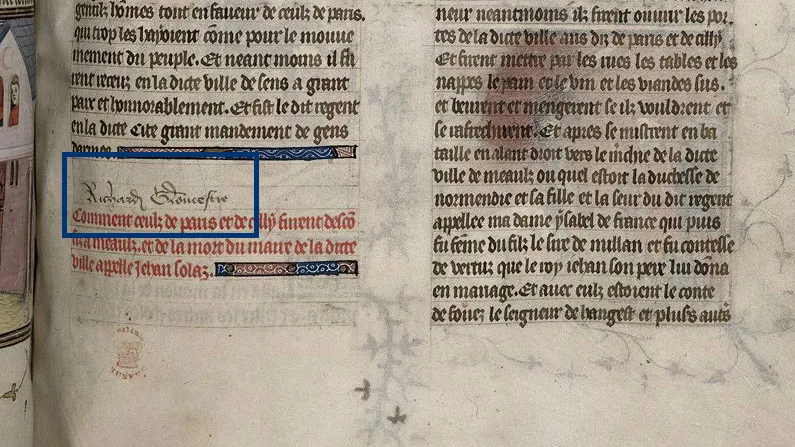
You might wonder, however, how this connects to codicology and medieval manuscripts. Richard III was a medieval king during a time of change in the field of book history. Handwritten books were less produced and printing was on the rise. This English king might not have had one of the most famous libraries, but nevertheless a very important one. He was one of the few people in high society of those days that signed his books.