Insular Scripts
Insular scripts are a family of medieval handwriting styles associated with Ireland and Britain and carried to continental Europe through religious and scholarly networks. They include the rounded lettering of richly decorated Gospel books and smaller, more compact hands used for other kinds of writing. Their history connects some of the most celebrated medieval manuscripts with the practical work of copying, studying, and transmitting texts (Stokes 213–15; “SFI-IRC Pathway Project”).
Origin and Development
Insular writing developed from the Latin scripts available to early medieval scribes. Its beginnings remain difficult to reconstruct because important early witnesses are not securely dated. The relationship between formal bookhands and more cursive writing is also debated: scholars have proposed development from formal scripts towards quicker hands, movement in the opposite direction, or interaction between both. A recognisable Insular system emerged by the seventh century, although its earliest stages resist a precise chronology (Stokes 215, 220).
The word “Insular” refers to the islands, but the writing tradition extended beyond them. Monasteries, travelling scholars, and missionary communities connected Ireland, Britain, and continental centres. These connections complicate attempts to assign a manuscript to a modern country simply because its handwriting looks “Irish” or “English”. Michelle P. Brown's discussion of the Echternach Gospels, for example, places their production within a shared tradition whose practitioners could have different origins while receiving related training. Letterforms travelled with people, books, and exemplars (773–74).
Characteristics
The two broad grades are Insular majuscule, often called Insular half-uncial, and Insular minuscule. Each includes variation in form and execution (Stokes 213–15). Formal half-uncial has a broad, rounded appearance, with short projections above and below the main bodies of letters. The resulting lines can look remarkably compact and even. “Majuscule” does not mean that every letter resembles a modern capital: these hands combine forms that modern readers might associate with uppercase and lowercase writing. Olga Bleskina's examination of the eighth-century Insular Gospels in St Petersburg illustrates this mixture within a formal bookhand (sec. 5).
Several details help distinguish Insular writing. Wedge-shaped beginnings appear at the tops of strokes. The g commonly has a flat top, while minuscule d can have a backward-sloping ascender. Insular minuscule forms of f, r, and s generally extend below the writing line, with their upper portions remaining relatively low. These features work together: identifying a hand requires attention to combinations of forms rather than one unusual letter. The contrast with Caroline minuscule becomes especially useful when comparing manuscripts or passages written in different traditions (Stokes 226).
Scribes also used ligatures, which join letters, and abbreviations that shorten words or syllables. One familiar sign is the Tironian et, ⁊, which resembles a figure seven and represents “and”. Other abbreviations include a hooked h for Latin autem and a reversed c for con-. Reading therefore involves learning conventions as well as recognising an alphabet. A sign that looks unfamiliar may represent several letters, while connected letterforms may form a ligature (“Insular Scripts”).
Usage and Importance
Insular manuscripts preserve more than biblical texts. An early copy of Adomnán's Life of Columba, now Schaffhausen, Stadtbibliothek, Gen. 1, provides an example of writing used to transmit a saint's biography. The manuscript has two columns of writing (Gamper and Marti). On page 4, a large initial introduces a passage, followed by letters that decrease towards the size of the surrounding script. This diminuendo visually distinguishes the opening from the surrounding text (“Insular Scripts”).
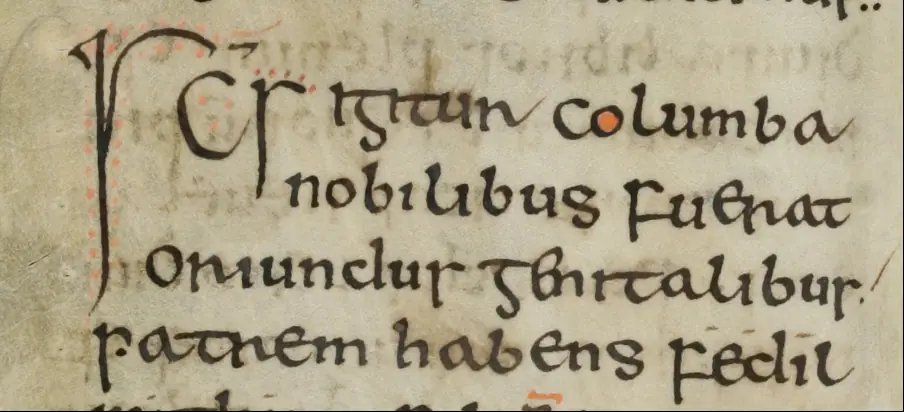 Fig. 1. Diminuendo in Adomnán's Life of Columba, Gen. 1, p. 4 (detail).
Stadtbibliothek, Schaffhausen, on DMMapp.
Image: e-codices, reproduced in Ad fontes;
CC0 1.0. Converted to WebP.
The Book of Armagh offers another useful comparison. Folio 159v begins with a large decorated A, followed by compact writing arranged as numbered extracts from Revelation. The thin, elongated strokes and numerous abbreviated forms create a different visual effect from the broad lettering of a formal Gospel page. Even here, however, decoration and practical organisation coexist: the initial marks an opening, while the numbered sequence divides the material into recognisable units. Comparing this page with a formal half-uncial manuscript makes the variety within Insular writing immediately visible (Stokes 216–17, plate 15.2).
Handwriting also provides evidence about manuscript production. In her study of the St Petersburg Insular Gospels, Bleskina identifies three scribes by combining differences in script with ruling, quire structure, and decoration. Her reconstruction suggests that the scribes prepared writing surfaces, organised gatherings, added text, and supplied ornament. The finished manuscript brings these activities together, but their traces remain visible. Script therefore helps researchers investigate the people and working practices behind a book, as well as the words it contains (secs. 5–6).
Representative Manuscripts
Book of Durrow
The Book of Durrow, Dublin, Trinity College, MS 57, is among the earliest surviving extensively decorated Insular Gospel books. Dated to approximately 650–700, it contains clear Insular majuscule writing alongside ornamented pages. Its precise place of production remains disputed, with Ireland, Iona, and Northumbria featuring in the discussion. Trinity's description associates its maker with the Columban network of churches, illustrating how religious affiliation can be more useful than modern national boundaries when describing early manuscript culture (Library of Trinity College Dublin).
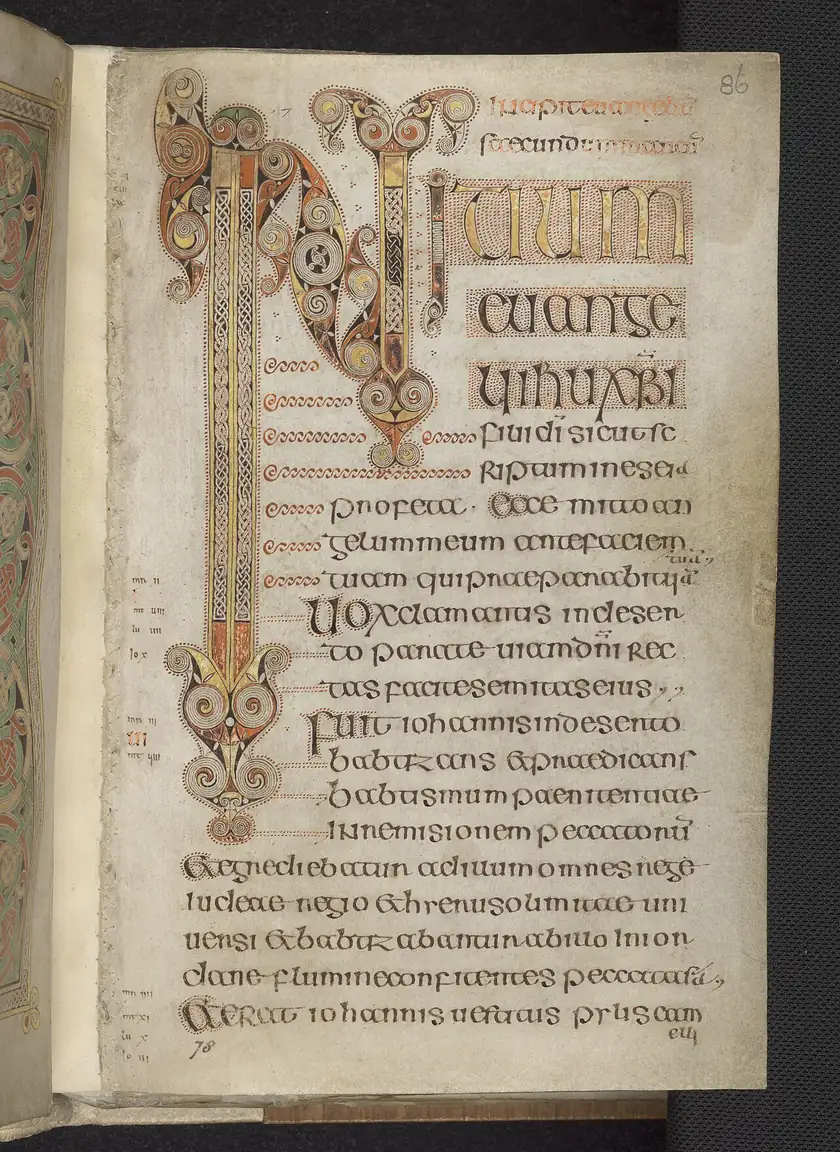 Fig. 2. The opening of Mark's Gospel in the Book of Durrow, MS 57, fol. 86r.
Trinity College Dublin on DMMapp.
Image © The Board of Trinity College Dublin, Digital Collections Department;
source and rights, CC BY 4.0.
Resized and converted to WebP.

Durrow's writing also contains variation within its formal appearance. The Earlier Latin Manuscripts catalogue records alternative forms of several letters and notes more fluent writing on folio 116. Such details remind us that a named script is a description of shared practices, with room for differences in execution and formality (“Volume / Number”).
Book of Kells
The Book of Kells, Dublin, Trinity College, MS 58, dates to around 800 and contains texts of the four Gospels with preliminary material. Its decorated initials and elaborated words make writing central to the visual experience of the book (“About the Book of Kells”). Folio 183v demonstrates this relationship particularly clearly. Large coloured initials interrupt and organise the dark lines of text, while elongated strokes contribute to the visual arrangement of individual lines. The page combines repeated letterforms with conspicuous variations in scale. Its visual richness depends on the interaction between the ordinary writing and the exceptional letters (Stokes 214–15, plate 15.1; Ní Ghormáin).
Lindisfarne Gospels
The Lindisfarne Gospels, London, British Library, Cotton MS Nero D IV, provide a further major example. Brown argues for production around 715–720 and interprets the book within the religious culture surrounding St Cuthbert (769, 773). Its later history adds another layer of evidence. In the tenth century, Aldred supplied an interlinear Old English translation and a colophon naming Eadfrith as the original scribe. The colophon is valuable testimony, although it was written considerably later than the Gospel text. The manuscript thus preserves successive acts of writing and interpretation within one volume (“Cotton MS Nero D IV”).
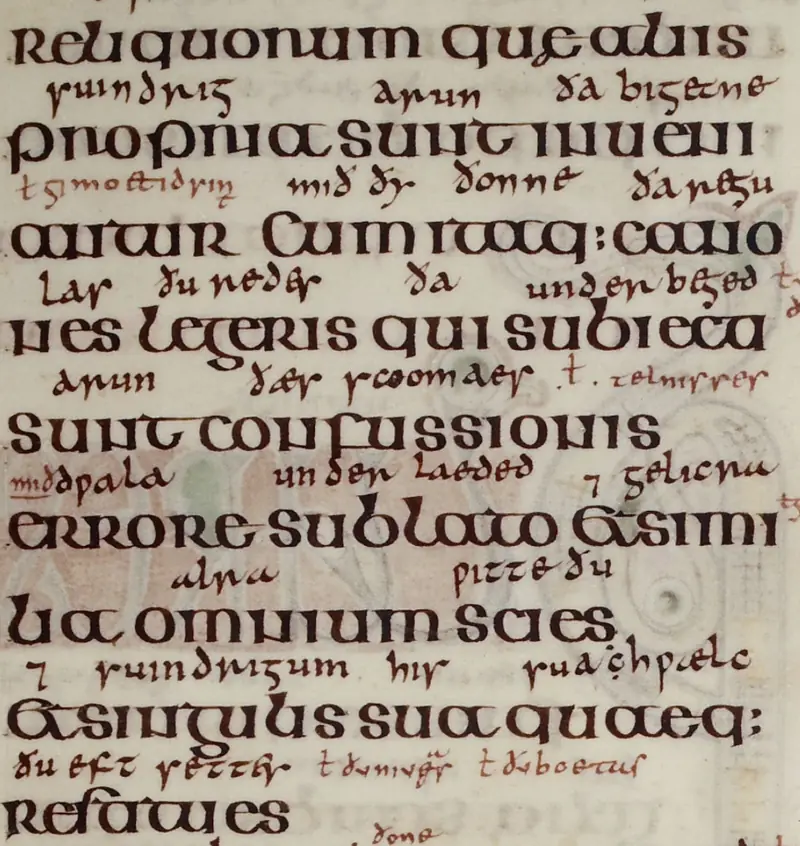 Fig. 3. Latin text and Aldred's interlinear Old English gloss in the
Lindisfarne Gospels, Cotton MS Nero D IV, fol. 5r (detail).
The British Library on DMMapp.
Image: British Library, via Wikimedia Commons;
public domain. Resized and converted to WebP.

Later Development and Legacy
Insular writing changed at different rates in different regions. In England, tenth-century square minuscule takes its name from the proportions of letters such as a, n, and u. Caroline minuscule increasingly served Latin texts, while forms descended from Insular writing remained important for Old English. A manuscript or charter could consequently contain different scripts associated with different languages. This makes the transition more complicated than the replacement of one alphabet by another: scribes could maintain distinctions and select forms according to what they were writing (“Insular Scripts”).
In Ireland, the tradition had a much longer afterlife. Its descendants contributed to Gaelic writing and printing, including an Cló Gaelach, which remained widely used into the twentieth century (“SFI-IRC Pathway Project”). Trinity's Early Irish Hands project connects this familiar visual inheritance with research into its medieval origins (“SFI-IRC Pathway Project”). The survival of recognisable forms should not obscure the development between early manuscripts and later typography, but it demonstrates the lasting cultural importance of the tradition.
For readers exploring medieval manuscripts today, Insular scripts offer a rewarding starting point. Comparing the columns of the Life of Columba, the numbered extracts in the Book of Armagh, and the decorated text of Kells reveals different solutions to arranging writing on a page. Attention to those choices brings the manuscript into focus as an object made for readers, shaped by trained hands and adapted to particular purposes.
The manuscript images retain the individual rights statements linked in their captions. The repository's CC0 dedication does not replace those terms.
Works Cited
“About the Book of Kells.” Trinity College Dublin, www.tcd.ie/about/content/bookofkells_index.php. Accessed 30 Oct. 2026.
Bleskina, Olga. “Eighth-Century Insular Gospels (NLR, Lat. F.v.I.8): Codicological and Palaeographical Aspects.” Translated by Olga Timofeeva, Studies in Variation, Contacts and Change in English, vol. 9, 2012, varieng.helsinki.fi/series/volumes/09/bleskina/. Accessed 30 Oct. 2026.
Brown, Michelle P. “The Lindisfarne Scriptorium.” The Oxford Handbook of Latin Palaeography, edited by Frank T. Coulson and Robert G. Babcock, Oxford UP, 2020, pp. 769–78. https://doi.org/10.1093/oxfordhb/9780195336948.013.7.
“Column of Preface from Lindisfarne Gospels.png.” Wikimedia Commons, 23 Nov. 2021, commons.wikimedia.org/wiki/File:Column_of_preface_from_Lindisfarne_Gospels.png. Accessed 30 Oct. 2026.
“Cotton MS Nero D IV.” Archives and Manuscripts Catalogue, British Library, searcharchives.bl.uk/catalog/040-001102725. Accessed 30 Oct. 2026.
Gamper, Rudolf, and Susan Marti. Katalog der mittelalterlichen Handschriften der Stadtbibliothek Schaffhausen. Urs Graf Verlag, 1998, pp. 67–68. e-codices, description of Schaffhausen, Stadtbibliothek, Gen. 1, updated by Rudolf Gamper, 2008, www.e-codices.unifr.ch/de/description/sbs/0001. Accessed 30 Oct. 2026.
“Insular Scripts.” Ad fontes, University of Zurich, www.adfontes.uzh.ch/en/tutorium/schriften-lesen/schriftgeschichte/unziale-und-halbunziale. Accessed 30 Oct. 2026.
Library of Trinity College Dublin. “The Book of Durrow f.125v.” Google Arts & Culture, artsandculture.google.com/asset/the-book-of-durrow-f-125v/oAGiyfKYdB-h2g. Accessed 30 Oct. 2026.
Ní Ghormáin, Caoimhe. “Folios 183v–184r, Gospel of Mark.” Visit Trinity, 5 Nov. 2024, www.visittrinity.ie/book-of-kells-pages-on-display/gospel-of-mark/. Accessed 30 Oct. 2026.
“SFI-IRC Pathway Project ‘Early Irish Hands: The Development of Writing in Early Ireland.’” School of Histories & Humanities, Trinity College Dublin, histories-humanities.tcd.ie/research/hands/. Accessed 30 Oct. 2026.
Stokes, Peter A. “Insular Script.” The Oxford Handbook of Latin Palaeography, edited by Frank T. Coulson and Robert G. Babcock, Oxford UP, 2020, pp. 213–33. https://doi.org/10.1093/oxfordhb/9780195336948.013.108.
Trinity College Dublin Library, Digital Collections Department. “IE TCD MS 57 f.86r.jpg.” Wikimedia Commons, 19 Mar. 2026, commons.wikimedia.org/wiki/File:IE_TCD_MS_57_f.86r.jpg. Accessed 30 Oct. 2026.
“Volume / Number: 2 / 273.” Earlier Latin Manuscripts, University of Galway, 7 Apr. 2022, elmss.universityofgalway.ie/catalogue/592. Accessed 30 Oct. 2026.