Skip to content

Digital Humanities

Free Online Course: England in the time of King Richard III from the University of Leicester

King Richard III and the MOOCs

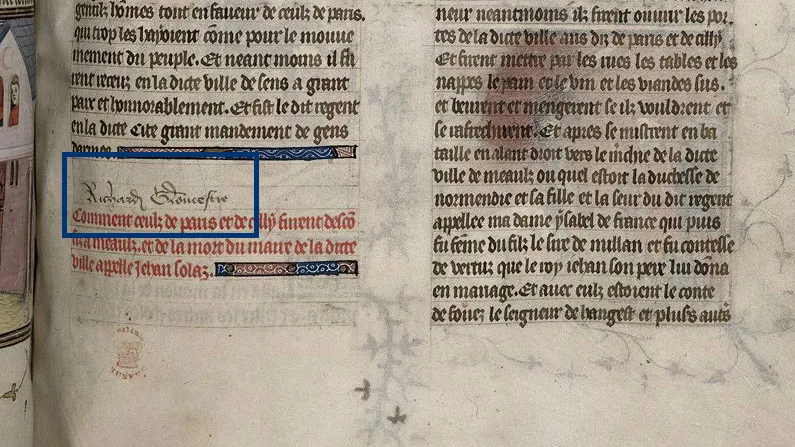
Since the last couple of years, more and more universities are participating in collaborations where they create so-called MOOCs (Massive Open Online Courses). These are a way for anyone that is interested to participate in open-access, free from costs university courses. The courses are basically on any kind of subject you can think of: from art and history to literature, computer science and medicine. You can find lists of courses on pages like Coursera and Futurelearn. I just finished a six-week course on Futurelearn by the University of Southampton about the archaeology of the old Roman port of Rome, Portus. My experiences with this were so good, I decided to also enroll for England in the time of King Richard III which is offered by the University of Leicester also on Futurelearn. One of the biggest news items in the field of archaeology last year was the discovery and identification of the (in)famous King Richard III under a parking lot in Leicester. Now, the University from this same city has created a six-week course starting coming Monday 30th of June about all sorts of aspects of the time of this King of England. You might wonder, however, how this connects to codicology and medieval manuscripts. Richard III was a medieval king during a time of change in the field of book history. Handwritten books were less produced and printing was on the rise. This English king might not have had one of the most famous libraries, but nevertheless a very important one. He was one of the few people in high society of those days that signed his books. BL Royal 20 C VII f.134 Richard III's signature.
31 New Digitized Manuscripts from e-Codices!

e-Codices, the Virtual Manuscript Library of Switzerland, has added 31 new digitized medieval manuscripts to their website. Obviously, we had to go and investigate. The new digitized manuscripts range from the 9th to the 18th century. Difficult to choose which ones to highlight since they are all wonderful to our eyes. Let's start from the one they have highlighted themselves.

The DMMmaps Project at DHBenelux 2014

As you might have read on our Facebook Page, Twitter, Tumblr, or basically anywhere our social media empire stretches, the Sexy Codicology team was at the Digital Humanities Benelux Conference (or DH Benelux) 2014: "A conference that showcases the state of the art in digital humanities, the most recent development in humanities research.", organized by the Huygens Institute for the History of the Netherlands and the National Library of the Netherlands (Koninklijke Bibliotheek). Useless to say, we are deeply honored and incredibly proud to have had the possibility to present the DMMmaps project to various experts and like-minded people from around the world. If you couldn't be there, but you are interested to know what I have said during my part of the speech at the conference, I have posted it all on Medium. In this I explain how the DMMmaps project works, what services we use, how we make them interact. I also explained the issues and the limits that the project faces (economical and technical ones). Please feel free to comment here or directly on Medium. Any suggestion on how to improve the project is very welcome!

Rising in the East: 3 Digital Libraries in Estonia added to the DMMmaps

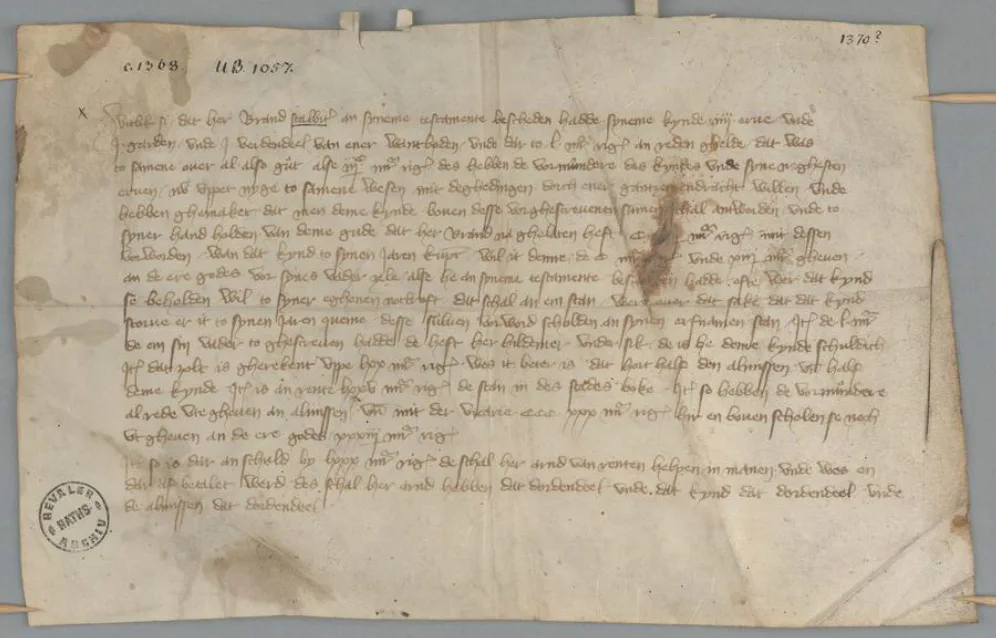
A quick update from the DMMmaps project: we have added 3 digital libraries in Estonia. Today we posted on the Sexy Codicology Tumblr a post concerning a manuscript coming from the Tallinn city archives, Estonia. After a little investigation, I noticed that these archives were not in the DMMmaps database. I followed the link in the original post by booksnbuildings and found that there were two other institutions that had digitized manuscripts available online. You can now find the Eesti Ajaloomuuseum - Estonian History Museum, the Estonian Historical Archives, and the Tallinn City Archives directly on our map, Together with other 324 digital libraries. These three institutions deliver together 1217 digital objects. Most are deeds, testaments, and concessions. Some books can be found for sure, but I haven't had the time to explore the whole collection. Nonetheless, these are extremely interesting documents that are very well digitized. No doubt that they will be useful to many researchers! I'll leave you with some of the examples of what you can find. Have fun exploring! TLA 230-1-IIIB from Digital Libraries in Estonia

Manuscript Collages from the Schoenberg Institute

Well, a week later the Schoenberg Institute for Manuscript Studies uploaded 5 new videos to their YouTube channel. In one of these there is something I have never seen before:  manuscript collages. Yes, you read it right: a manuscript collage. It appears that in the 18th century, or slightly earlier, someone had the idea of getting a book of hours (use of Rome?), tear it to pieces and make something completely different out of it: two squares composed of the miniatures from the manuscript in the middle (Jesus blessing and teaching his followers, but also show the annunciation, the second coming of Christ, possibly the calling of Peter and Andrew, a figure wearing a mitre praying to an angel, and possibly the moneylenders in the temple, as mentioned in the video description); the marginal decoration on the sides of these, and in the middle of the four borders, parts of texts from the manuscript: excerpts from the New Testament gospels, a calendar of feast days, and homilies of Pope Gregory I. The result is, in my opinion, beautiful.

The Schoenberg Institute for Manuscript Studies on YouTube

The Schoenberg Institute for Manuscript Studies has recently uploaded a series of videos in which some of their manuscripts are presented. I believe this is a fantastic initiative for many reasons. First of all, it is a great way to promote their manuscripts and their treasures; I never had the pleasure to visit their website and their digitized manuscripts, but when their videos popped-out on the Sexy Codicology YouTube feed I discovered a wealth of digitized books. OK, the videos aren't the most refined, and maybe the Schoenberg Institute for Manuscript Studies' YouTube channel could use some stylistic retouches here and there, but they are informative; they do exactly what they are meant to do: orientate the viewer (a researcher, an enthusiast) by describing the book. Some information about the binding, the history, the quality of the manuscript; the miniatures and illuminations if there are any. Plus an invitation to visit their website where the digitized version of the manuscript just described is (a good "marketing" move, according to me.) No protesting because in the Schoenberg Institute videos they are not using gloves, please! Manuscripts were build to last. They are rarely taken out of the box nowadays;  if you have washed your hands, dried them well, and are very careful with what you handle, they will last thousands of years more. I truly hope that many more institutions start making similar videos. There are only good things to come from them: more visits to the digitized collections, possible extra income from the monetizing of the videos, giving the impression of  being able to bridge an ancient medium (a manuscript) with contemporary media. Well done Schoenberg Institute!

The DMMmaps Project so far

There is something genuinely thrilling in discovering a digitized medieval manuscript! The DMMmaps Project is our small attempt to help everyone find these incredible books, by bringing together the libraries that make them available online.