Skip to content

Blog

We are working on something...

Yep! It involves, as always, code, data, and obviously, digitized medieval manuscripts :) Stay tuned as we develop the idea and release it into the wild. Soon. We have also started doing some interesting research on the world of digitized material, its current status, and what could be done to improve the world of manuscripts. It's very dry and boring material at the moment, but we are going to spice it up for the blog at a letter stage. Speaking of research: we have started putting together the material for our presentation next month in Belgium. Interesting stuff in our opinion! As always, once we are done, you will be able to read and download everything from sexycodicology.net! See you there.
Improving evergreen content on SC

We are rewriting and improving some of our pages. The first one to be edited was the "Codicology" page that we have linked here. It's not perfect yet: it misses some content, and the style is a bit wonky...  But we'll keep working on it! Once that is done, we'll move to other cornerstone pages on the Sexy Codicology website. We have also started using MLA citation format for our references on our posts. Although this will very often link to locked journals, and many readers will not be able to read the full texts, we find it important to cite our sources whenever we write these pages. Students, researchers, or enthusiasts can then find the texts we use and gain access via their university or library. We'll do our best find OA alternatives to link to. The aim is to have citations site-wide: pages and blog posts, Over time, all our content will be properly referenced. Like it should have been from the beginning, but we lacked the proper tools (and knowledge!) to do so :)

IIIF - The digitized manuscripts revolution we've all been waiting for!

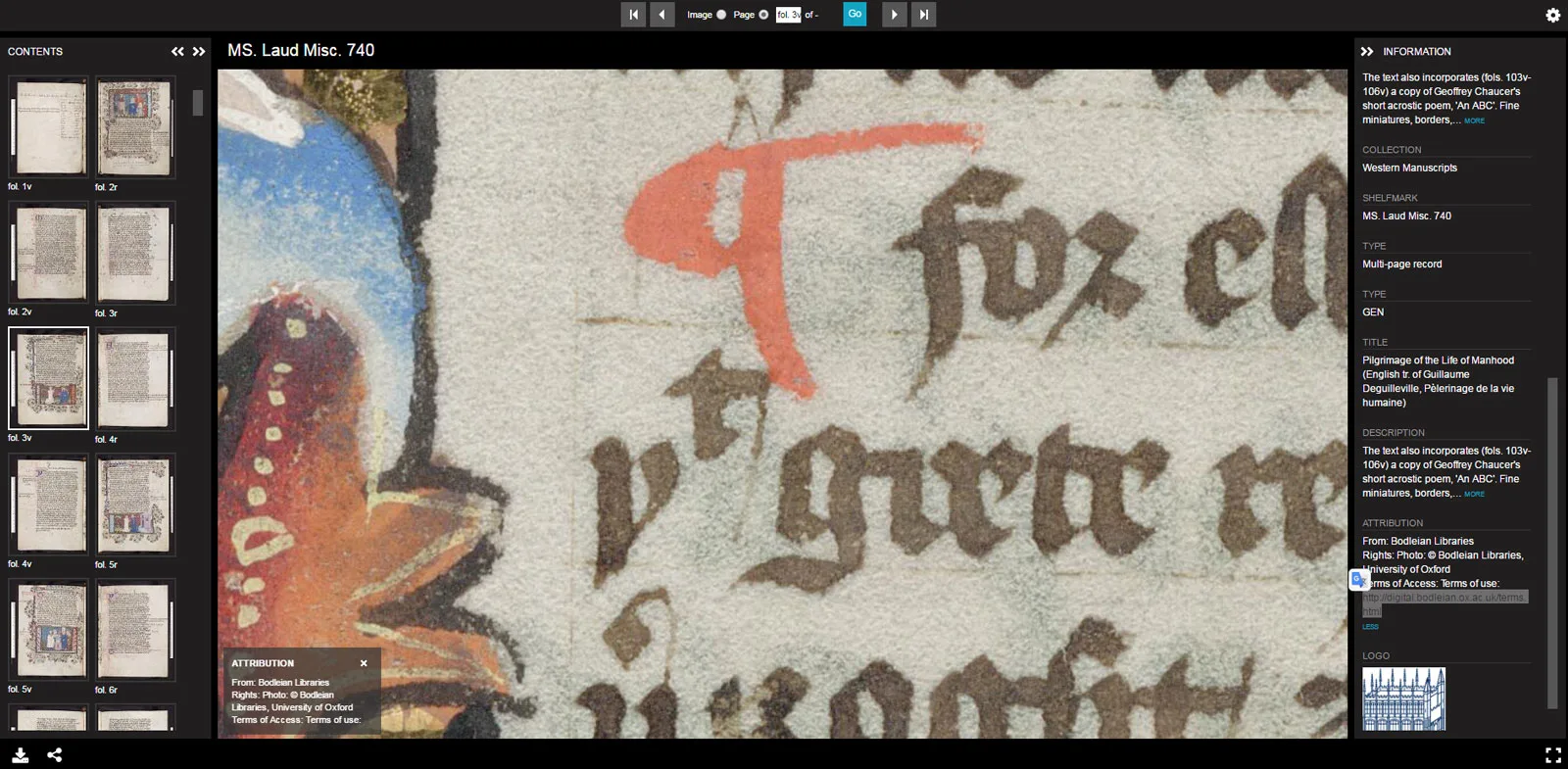
We created the DMMapp to make it easier for you to find collections of digitized manuscripts - and IIIF is making it easier for you to view, study, and compare manuscripts. In this post we are going to tell you all about why it’s awesome! In 2011, a group of international libraries and universities (Stanford University, The British Library, Bodleian Libraries, The Bibliothèque nationale de France, the National Library of Norway, Cornell University, and Los Alamos National Laboratory Research Library) set up the International Image Interoperability Framework, or, in short, IIIF (pronounced as triple-I-F). IIIF example from the Bodleian Library

100 newly digitized manuscripts online

There is no way we could have come up with a better title. The British Library and the Bibliothèque nationale de France have just digitized 100 manuscripts, all dated between 700CE and 1200CE, and made them available online! The news is so awesome that as soon as we saw it on Twitter we decided we would write this post.

100 pre-1200 manuscripts have been added to the British Library's Digitised Manuscripts site. Get the list at https://t.co/GZkK4TtD0m pic.twitter.com/FhrQrB19at

— Medieval Manuscripts (@BLMedieval) March 16, 2017

The digitized manuscripts of the Biblioteca Medicea Laurenziana

The Laurentian Library, in context

Florence is a beautiful city. The kind of city many people from Rome like myself would like to move to; so similar is it to the Capital: full of art, culture, history… but without the broken roads, the traffic, and a bit more calm. Florence is also home to the Laurentian Library, or, as it's called in Italian: Biblioteca Medicea Laurenziana, or more simply "La Laurenziana". One of the greatest libraries in the world; one of the places that you have to visit. If you can't get there, you can view their digitized manuscripts on their recently launched new interface! But how did the Laurentian Library come to be? The history of the library is extremely long; so let's go back to the beginning: it's 1519 and you are Giulio di Giuliano de' Medici. You are a powerful Cardinal that will be pope just four years later. You want a library. Who do you call? Well, Michelangelo, of course! You spare no expense. Laurentian Library, Maiestas Domini (Christ in Majesty) with the Four Evangelists and their symbols, at the start of the New Testament; page from Codex Amiatinus (fol. 796v), Firenze, Biblioteca Medicea Laurenziana.